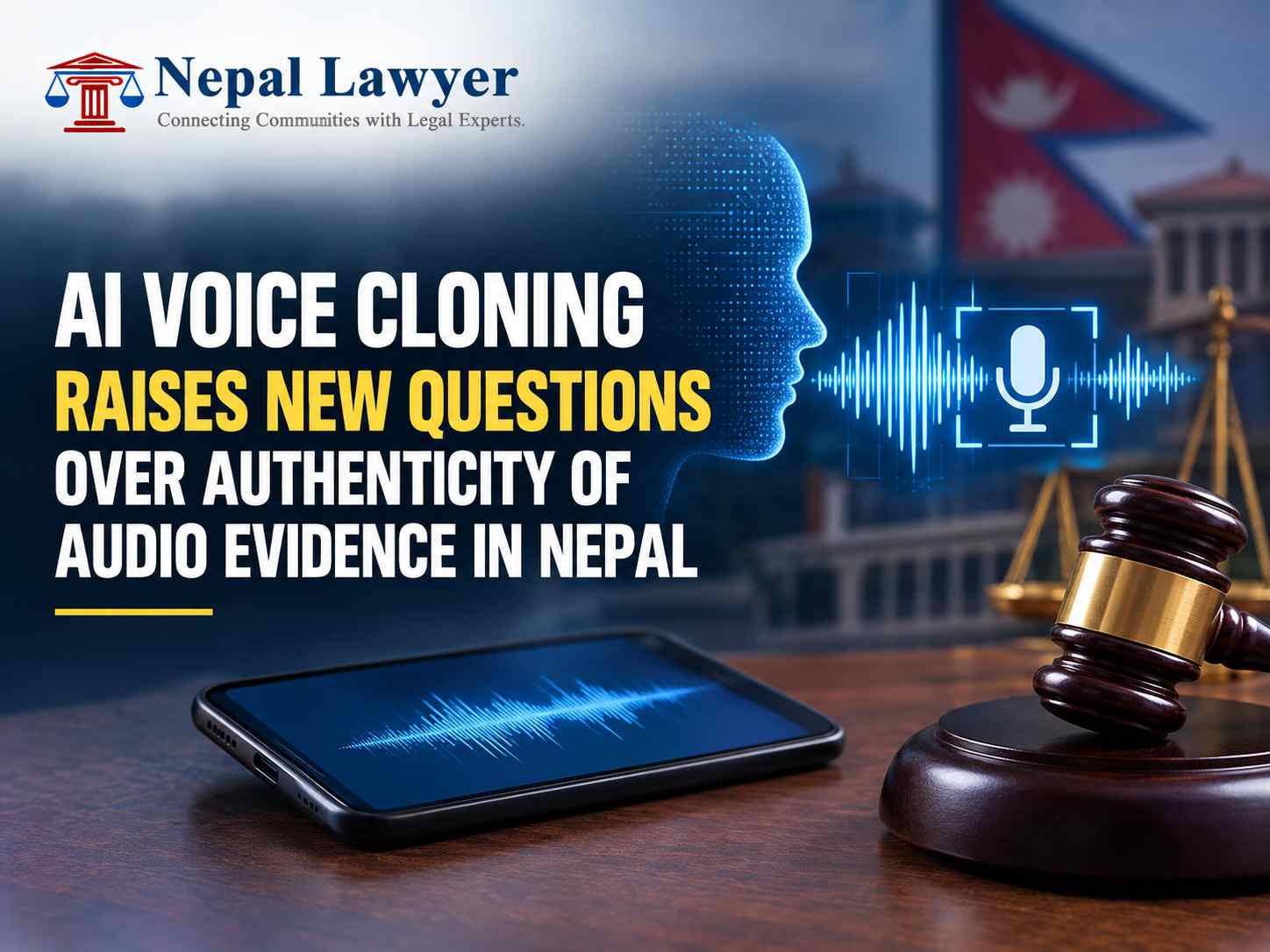
Kathmandu, Ashoj 30 - Artificial intelligence (AI) voice-cloning technology is raising concerns over the authenticity of audio recordings in Nepal, particularly when disputed recordings are used in criminal investigations, media reports or court proceedings. Experts warn that suspicious audio should neither be accepted as genuine nor dismissed as AI-generated without proper technical verification.
The issue has gained attention following the circulation of an audio recording allegedly involving Rastriya Swatantra Party lawmaker Khagendra Sunar, who has denied that the voice in the recording is his and claimed that the audio was created using artificial intelligence and other technology. The allegations remain disputed, highlighting growing concerns over the reliability of digital audio evidence in Nepal.
AI voice-cloning tools can imitate a person's tone, pronunciation, speaking speed and speech patterns using samples of their real voice. Some modern systems can create a basic voice clone using just three to ten seconds of clear audio, although longer and more convincing conversations may require additional samples. Experts say unnatural pauses, repetitive speech rhythms and inconsistent emotions may provide clues to synthetic audio, but these signs alone cannot establish whether a recording is fake.
Digital forensic specialists can examine a recording's waveform, spectrogram, pitch, frequency patterns, metadata and possible editing history to assess its authenticity. Investigators may also compare disputed recordings with verified voice samples and examine supporting information, including call detail records, call timing, location data and other relevant evidence. However, AI audio-detection tools are not completely reliable and may incorrectly classify genuine recordings as artificial or AI-generated audio as authentic. Experts therefore recommend using multiple verification methods rather than relying on a single tool.
Nepal's Evidence Act, 2031, provides the general legal framework for evaluating evidence in judicial proceedings, while the Electronic Transactions Act, 2063, forms part of the country's legal framework concerning electronic records and transactions. As AI-generated audio becomes increasingly convincing, questions surrounding the authenticity, reliability and legal assessment of digital evidence are likely to become more significant in investigations and court proceedings.
Although Nepali voice-cloning technology faces limitations due partly to the availability of high-quality training data, accessible AI tools can already produce increasingly convincing imitations of Nepali voices. This creates two major risks: fabricated recordings may be presented as genuine, while authentic recordings may be dismissed as AI-generated without sufficient evidence. Experts emphasize that disputed audio and video recordings should be assessed through proper digital forensic analysis, corroborating evidence and applicable legal procedures rather than relying solely on how convincing they sound or on unverified claims of AI manipulation.
Source: The Kathmandu Post