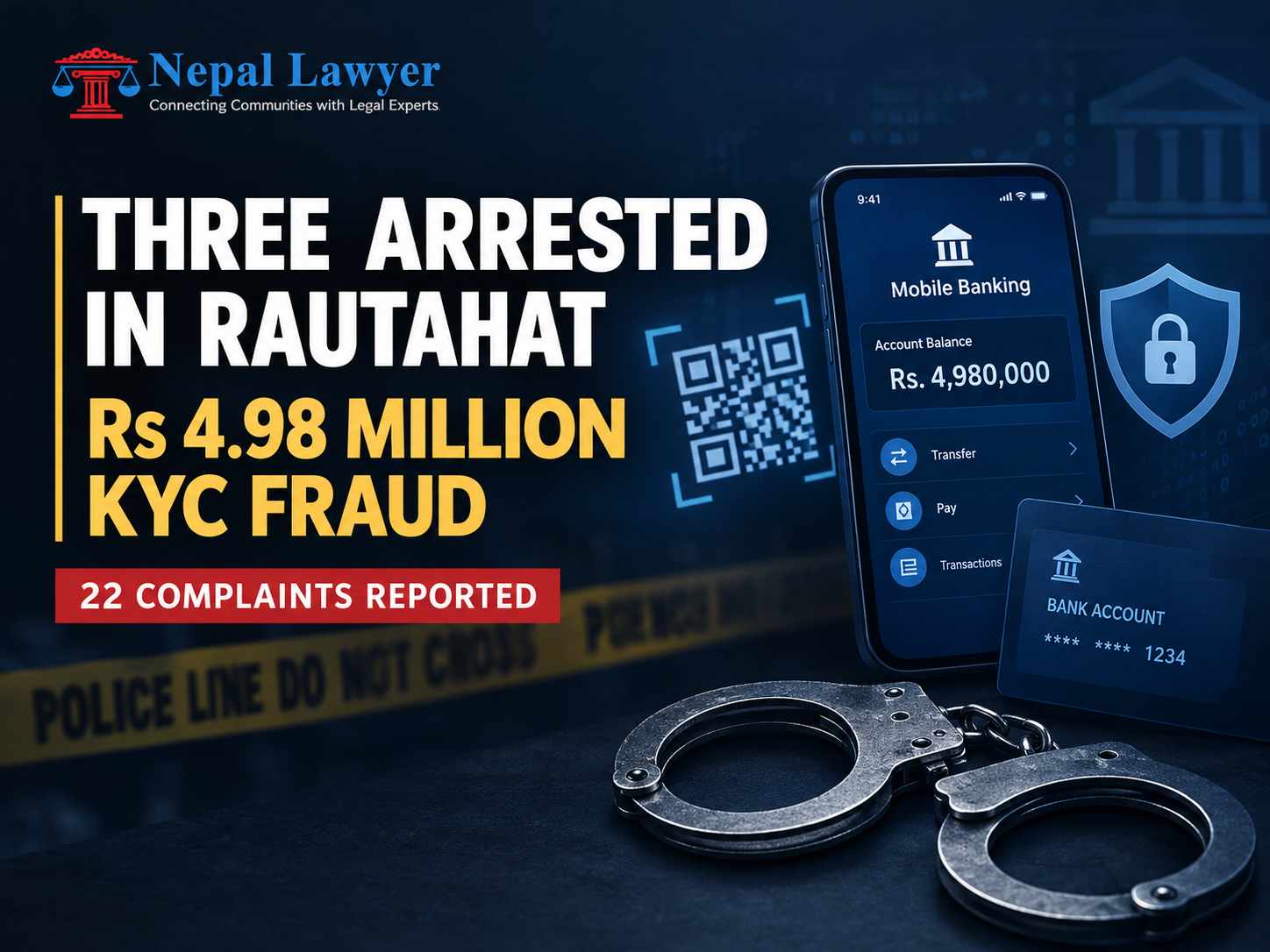
Kathmandu, October 13- In connection with an alleged digital banking scam that allegedly duped victims of Rs 4.98 million by posing as bank and digital wallet representatives, police have detained three people, including an Indian national. 22 complaints have been filed thus far, according to Rautahat police, and initial inquiries have shown losses of Rs 4,987,333. On October 9, raids in Gaur Municipality resulted in arrests.
According to police, the suspects allegedly contacted mobile banking users via WhatsApp messages and phone calls, stating that their Know Your Customer (KYC) information needed to be updated. They allegedly tricked victims into taking part in video chats, sharing their mobile phone displays, and filling out Google Forms by pretending to be bank or eSewa personnel.
Investigators claim that the suspects utilized the information they acquired to access victims' digital wallets and bank accounts without authorization. According to reports, the funds were moved via QR code transactions or to other people's accounts. Additionally, police are looking into allegations that part of the proceeds were transferred through Binance for cryptocurrency investments after being converted into US dollars.
Police found INR 3,236, seven cell phones, eleven SIM cards, thirty bank deposit slips, three ATM cards, three check books, a pen drive, two memory cards, and Rs 162,210 in Nepali currency during the operation. Investigators also found banking paperwork, notebooks, and financial records, including checks from Global IME Bank and Prabhu Bank. To track down the transactions and find more individuals who might be involved, police are analyzing the confiscated materials.
While authorities continue to evaluate the overall financial losses and look for further suspects, the accused are being probed on allegations of fraud and organized crime. The public has been advised by authorities not to give one-time passwords (OTPs), PINs, passwords, bank account information, or mobile phone screens to unidentified callers posing as KYC help providers. Consumers have been instructed to report suspected fraud to the authorities and confirm such requests through legitimate bank or digital wallet channels.
Source: The Himalayan Times