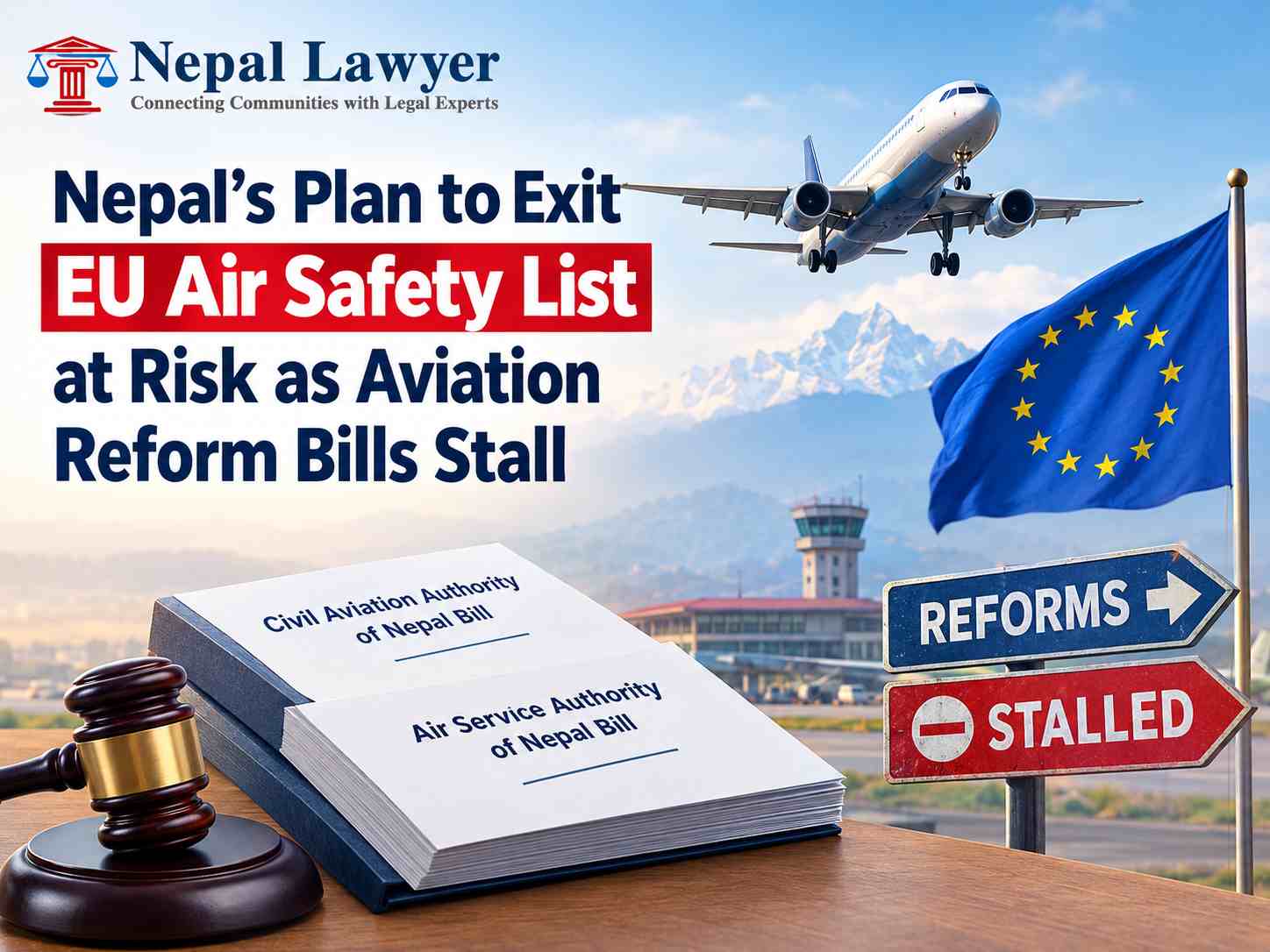
Kathmandu, Ashoj 18 - Nepal's move out of the European Union (EU) Air Safety List by mid-January 2027 is now in jeopardy as two key aviation reform bills did not progress in Parliament in the recently concluded session.
The proposed Civil Aviation Authority of Nepal Bill and Air Service Authority of Nepal Bill are key to Nepal's attempts at restructuring its aviation industry. The bills are meant to decouple the process of aviation regulations and safety checks from the operations and services of the airports, which are currently under the control of Civil Aviation Authority of Nepal (CAAN). This current setup has sparked concerns of regulatory independence and conflicts of interest.
Nepal continues to have concerns with its aviation safety oversight system and remains on the EU Air Safety List since December 2013. While governments have committed to reform, no progress has been made on the separation of regulatory and operational responsibilities over the years. The Nepalese government had targeted to finish the restructuring process by mid-January 2027 as part of the government's overall effort to enhance aviation safety in Nepal and restore international trust.
The delay is noteworthy ahead of Nepal's planned International Civil Aviation Organization (ICAO) safety audit in May 2027. Prior to this assessment, aviation laws, regulations and related documents typically must be completed well in advance so that the auditors can determine if the new framework is being implemented. Thus, officials have expressed their concern that if the proposed legislation is not implemented on time, then Nepal may fall under the ICAO assessment under the existing system.
The proposed restructuring would allow the Air Service Authority of Nepal to provide air-navigation and air-traffic-management services as well as operation, management and development of the airports. An independent Civil Aviation Authority of Nepal would have been in charge of regulation and general aviation safety. The proposed law also covers the development of airports, private-sector involvement, staff adjustment and the operation of the two institutions.
The EU has not mandated by legislation for Nepal to create two distinct authorities. Its more general interest is that the functions that aviation performs within the regulatory framework and those that are expected from service providers are sufficiently distinct to reduce the risk of conflict of interest. ICAO has also emphasized previously the need for a better distinction between aviation regulators and aviation operators and service providers.
The two aviation reform bills have to wait for the next parliamentary session as Parliament is now prorogued. The delay could complicate Nepal’s EU Air Safety List removal plan, its preparations for the upcoming ICAO audit and its wider aviation-sector reform agenda.
The implications for Nepal are more than just lifting them from the EU aviation safety list. If the aviation reform is successful, it will boost the safety of passenger transportation, accountability of the regulators, air connectivity and tourism, and will help to build trust of airlines, international air regulators, and passengers in the civil aviation industry in Nepal.
Source: The Kathmandu Post