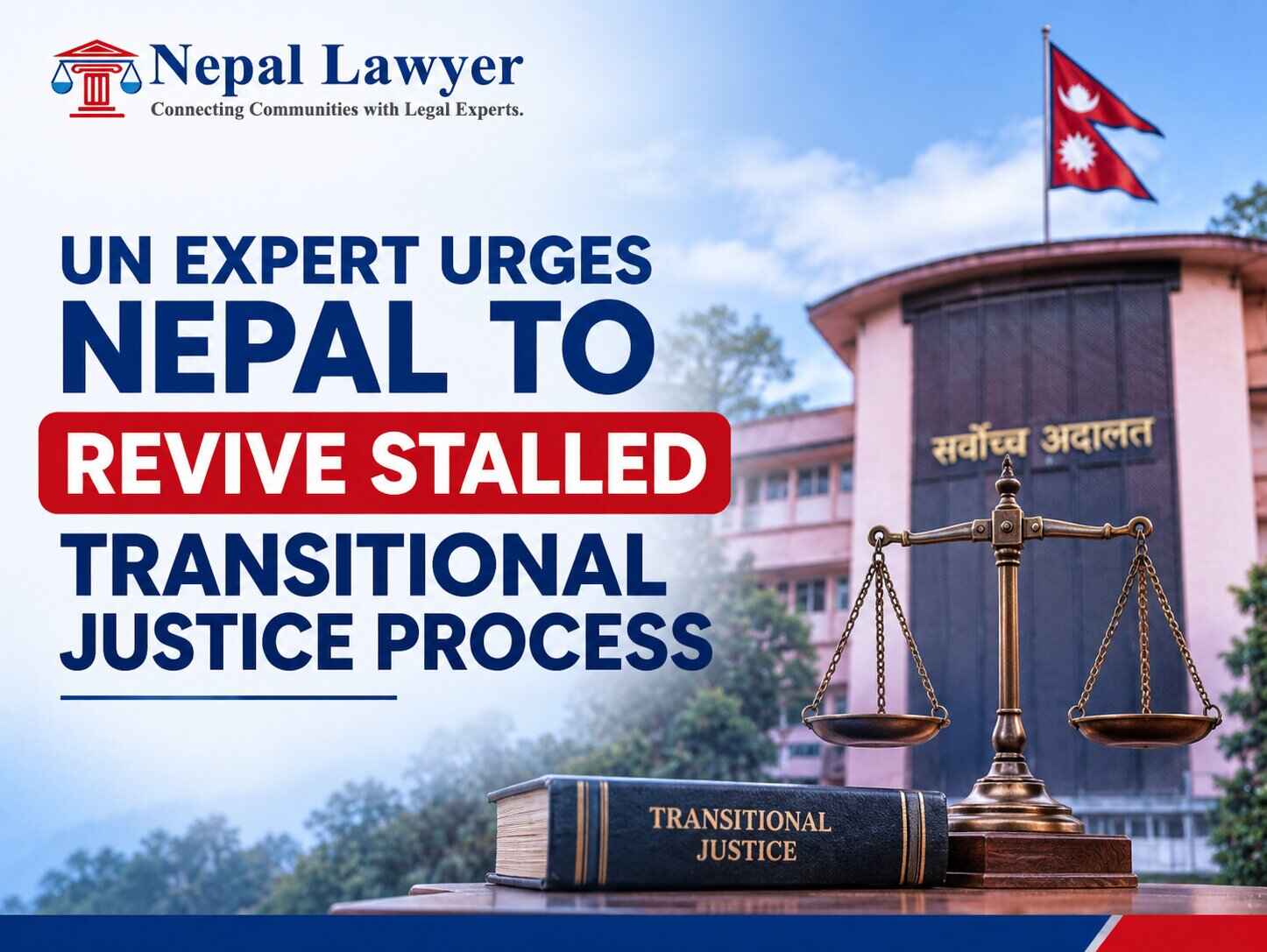
Kathmandu, Mangsir 01 - A United Nations human rights expert has urged the Nepal government to make transitional justice a national priority and expedite appointments to the two transitional justice commissions, as the process continues to face delays nearly two decades after the end of the decade-long armed conflict. Bernard Duhaime, the UN Special Rapporteur on the promotion of truth, justice, reparation and guarantees of non-recurrence, called for renewed efforts to ensure justice for conflict victims and families of the disappeared.
Duhaime made the appeal ahead of the 20th anniversary of the Comprehensive Peace Accord, signed on November 21, 2006, which formally ended the Maoist insurgency. He stated that although several transitional justice initiatives had been introduced since the agreement, progress remained slow. He also noted that the formation of a new administration earlier this year had created an opportunity to strengthen governance and revive the transitional justice agenda.
The UN expert urged the government to appoint office-bearers to the Truth and Reconciliation Commission and the Commission of Investigation on Enforced Disappeared Persons so that both bodies could resume their work. He further called on the authorities to engage meaningfully with international human rights mechanisms to fulfil Nepal's commitments to justice, accountability and human rights. He also expressed regret over his inability to undertake a planned visit to Nepal this year and said efforts would continue to identify alternative dates.
Nepal's transitional justice process has remained stalled due to political disagreements, legal and institutional challenges, and delays in appointing officials to the two commissions. Both commissions have been without office-bearers since the government removed their previous leadership through an ordinance in May 2026. Meanwhile, thousands of conflict victims and families of disappeared persons continue to await truth, justice and reparation. The Comprehensive Peace Accord had originally envisaged establishing a Truth and Reconciliation Commission within six months to investigate serious human rights violations and crimes against humanity committed during the conflict and promote reconciliation.
Source: The Kathmandu Post