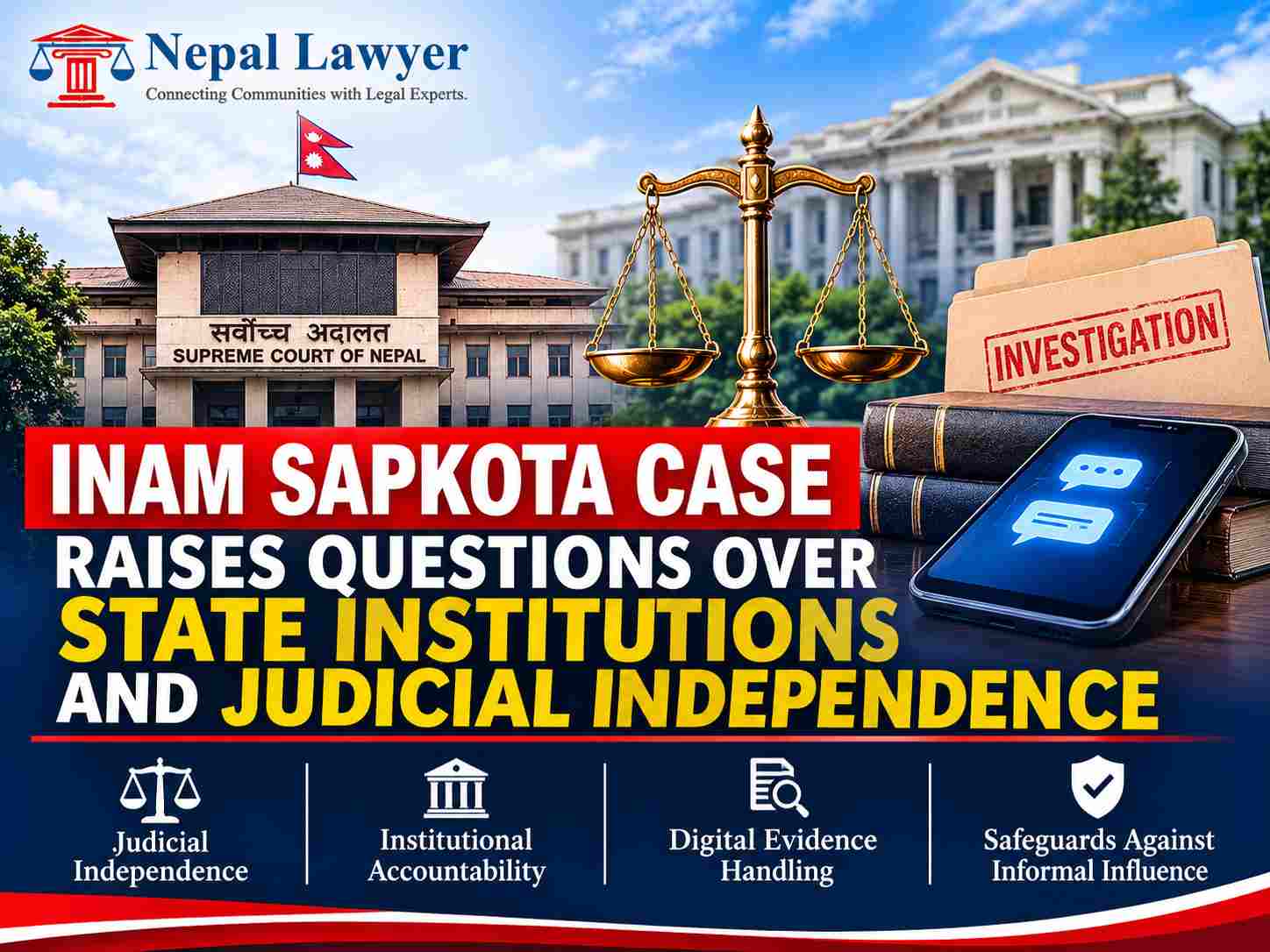
Kathmandu, Kartik 18 – The investigation of 31-year-old Inam Sapkota, who held no formal government position, has expanded into a wider controversy involving the Prime Minister’s Office, senior security officials and members of the judiciary, raising questions about institutional accountability and possible informal influence within state bodies.
Sapkota was intercepted at Tribhuvan International Airport in late September while preparing to travel to Delhi. Investigators later examined his mobile phones and reportedly found communications with senior police and Armed Police Force officials, politicians, lawyers, businesspeople and sitting and former judges.
The investigation, which began with allegations of indecent behavior, later expanded to include issues related to foreign exchange, banking offences and money laundering. Authorities also reportedly recovered documents containing references to financial transactions and prominent individuals. These allegations remain under investigation and do not by themselves establish wrongdoing by those named.
A key concern is Sapkota’s apparent ability to present himself as someone with access to senior government officials. The Prime Minister’s Secretariat has maintained that he was misusing the names of the prime minister and his office rather than acting on their behalf. Investigators also reportedly found communications involving appointments, transfers, promotions and procurement matter within security agencies.
The controversy became more serious after reports revealed Sapkota’s communications with Supreme Court Justice Hari Prasad Phuyal. Phuyal acknowledged meeting and communicating with Sapkota but denied any financial dealings or improper influence. Reported messages suggest Sapkota raised issues involving pending court cases, including one involving businessman Rohit Gupta. Phuyal has said the bench decided the matter independently.
The communications show that Sapkota contacted a sitting judge regarding a pending case, but they do not by themselves prove that a judicial decision was influenced. Chief Justice Manoj Kumar Sharma has also denied having contact with Sapkota, while the Supreme Court’s full court has said the allegations should be investigated under the Constitution and existing law.
Questions have also been raised over the handling of Sapkota’s mobile phones, including the chain of custody of digital evidence, after reports suggested that one device passed through people close to the prime minister before forensic examination.
The case has drawn further attention following the arrest of journalists from Naya Patrika and Diyo Post after they reported on leaked communications involving Sapkota and members of the judiciary, raising separate concerns about press freedom and the treatment of journalists reporting on powerful institutions.
At its core, the case raises a wider question about how a person without an official position was apparently able to build access to senior officials and judges and create the impression that he could influence state decisions. Investigators must now determine whether Sapkota was merely exploiting those connections or whether any actual intervention or benefit occurred.
The controversy has therefore become a broader test of judicial independence, institutional accountability, digital evidence handling and safeguards against informal influence over public power.
Source: The Kathmandu Post