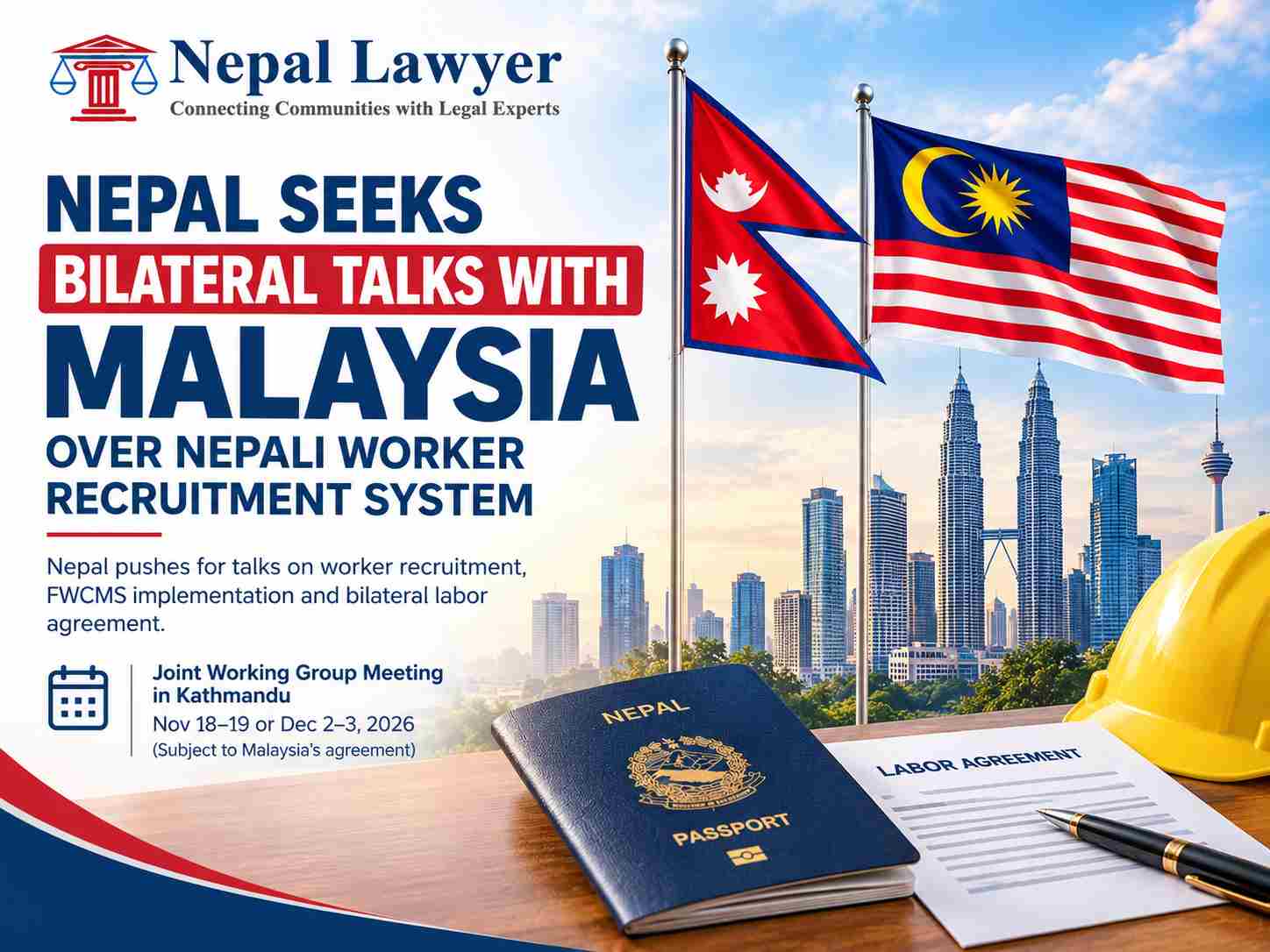
Kathmandu, Kartik 15 - Nepal and Mauritius have moved closer to finalizing a bilateral labor agreement that would allow Nepali workers to be recruited through a government-to-government (G2G) mechanism, with greater government oversight of recruitment costs and worker protection.
The High Commission of Mauritius in New Delhi formally informed Nepal’s Ministry of Foreign Affairs on October 29 that Mauritius had agreed to proceed with Nepal’s proposal and forwarded a revised draft Memorandum of Understanding (MoU). Nepal must now complete its domestic procedures before the agreement can be finalized.
Under the proposed arrangement, Nepali workers could receive employment opportunities in sectors including manufacturing, construction, agriculture, tourism and information technology. Recruitment would be government-led, with emphasis on selecting skilled and trained workers and ensuring that procedures comply with the laws of both countries.
A key feature of the proposed agreement is the Employer Pays Principle. This means recruitment-related costs should be borne by the employer rather than being transferred to the worker. The aim is to reduce excessive recruitment charges, debt and exploitation that migrant workers can face before leaving Nepal.
Nepal and Mauritius had already signed a labor MoU in 2019, which provided that employers would bear costs including recruitment-service fees, work-permit charges, insurance, medical examinations and round-trip airfare. The proposed G2G system would provide stronger government involvement in how workers are selected and recruited.
The revised draft also addresses workers’ rights and welfare, employers’ responsibilities and repatriation arrangements when an employment contract expires or is terminated. Greater government involvement is intended to reduce dependence on informal intermediaries and provide clearer accountability when recruitment problems arise.
However, the new G2G arrangement has not yet come into force. Nepal is still completing the necessary domestic procedures, meaning workers should not treat the proposed agreement as an already-open government recruitment program or pay anyone claiming to secure a job under the new mechanism.
If finalized, the agreement would become part of Nepal’s broader effort to diversify foreign-employment destinations while promoting safer recruitment, lower worker-paid costs and stronger protection of migrant workers’ rights.
Source: The Kathmandu Post