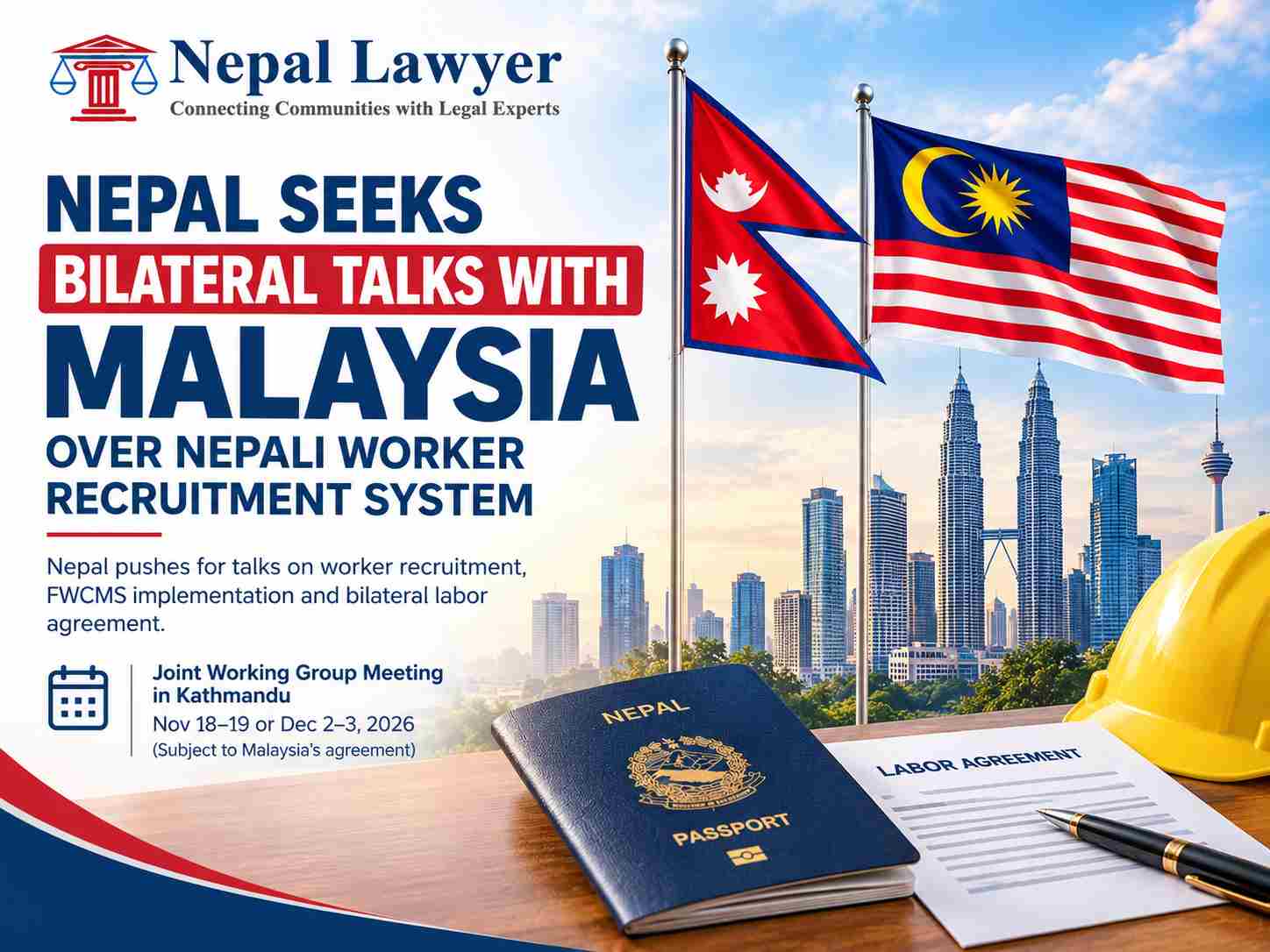
Kathmandu, Kartik - 10 Nepal has formally sought talks to address its concerns regarding recruitment of Nepali workers, as well as the implementation of Malaysia's Foreign Workers Centralized Management System (FWCMS) in the country. The Ministry of Youth, Labor and Employment is considering to convene the meeting of the Joint Working Group between Nepal and Malaysia in Kathmandu on November 18-19 or December 2-3, 2026, subject to the agreement of Malaysia. It went through the Ministry of Foreign Affairs.
The discussions will include consideration of bilateral labor agreement signed between the two countries in 2018, and the selection, processing and recruitment of Nepalis to work in Malaysia. Nepal has asked the existing recruitment system to continue until there is a mutual agreement between the two governments. This controversy emerged when Malaysia adopted the FWCMS and appointed 25 Nepali recruitment agencies as principal agencies and 250 supporting agencies. Nepal has asked those agencies how they were chosen, and whether limiting recruitment to a small number of agencies is in line with Nepal's laws and principles of fair competition for foreign employment.
However, the system has been defended by Malaysia as a means to subject the recruitment of foreign workers to a more robust and effective government control, eliminate illegal fees and intermediaries and improve the transparency of recruitment. The Malaysia government has rejected Nepal's request for all manpower agencies to be allowed to attend and has continued its policy of conducting business through manpower agencies selected by it earlier this month.
Nepal's Foreign Employment Act, 2064 is the legal instrument that sets out to make overseas employment safe, organized and dignified' and safeguard the rights and interests of workers and licensed recruitment businesses. The Act also explicitly provides the basis for bilateral labor agreements with countries where or who may send Nepali workers. The labor agreement between Nepal and Malaysia signed in 2018 was primarily aimed at easing the financial burden on Nepal's migrant workers. As per that contract, Malaysian employers had to bear all the recruitment expenses such as recruitment agency fees, air fare, visa fees, medical and security screening. The current controversy is not only one concerning the rights of which manpower agencies may recruit workers. It also brings up wider issues of transparency, competition, recruitment fees, government inspections and safeguarding migrant workers from exploitation.
Nepal has requested that current procedures continue until there is a bilateral agreement put in place, which will not leave workers and employers in limbo with abrupt changes to the recruitment process. The Joint Working Group meeting is expected to be a formal platform for the two governments to settle the disagreement and agree to the renewal of the agreement on labor cooperation. The development also emphasizes on using recruitment channels approved by the government and requires verifying any job offer or demand of payment before paying money to an individual or recruitment agency for Nepalis planning to go to Malaysia.
Source: The Kathmandu Post