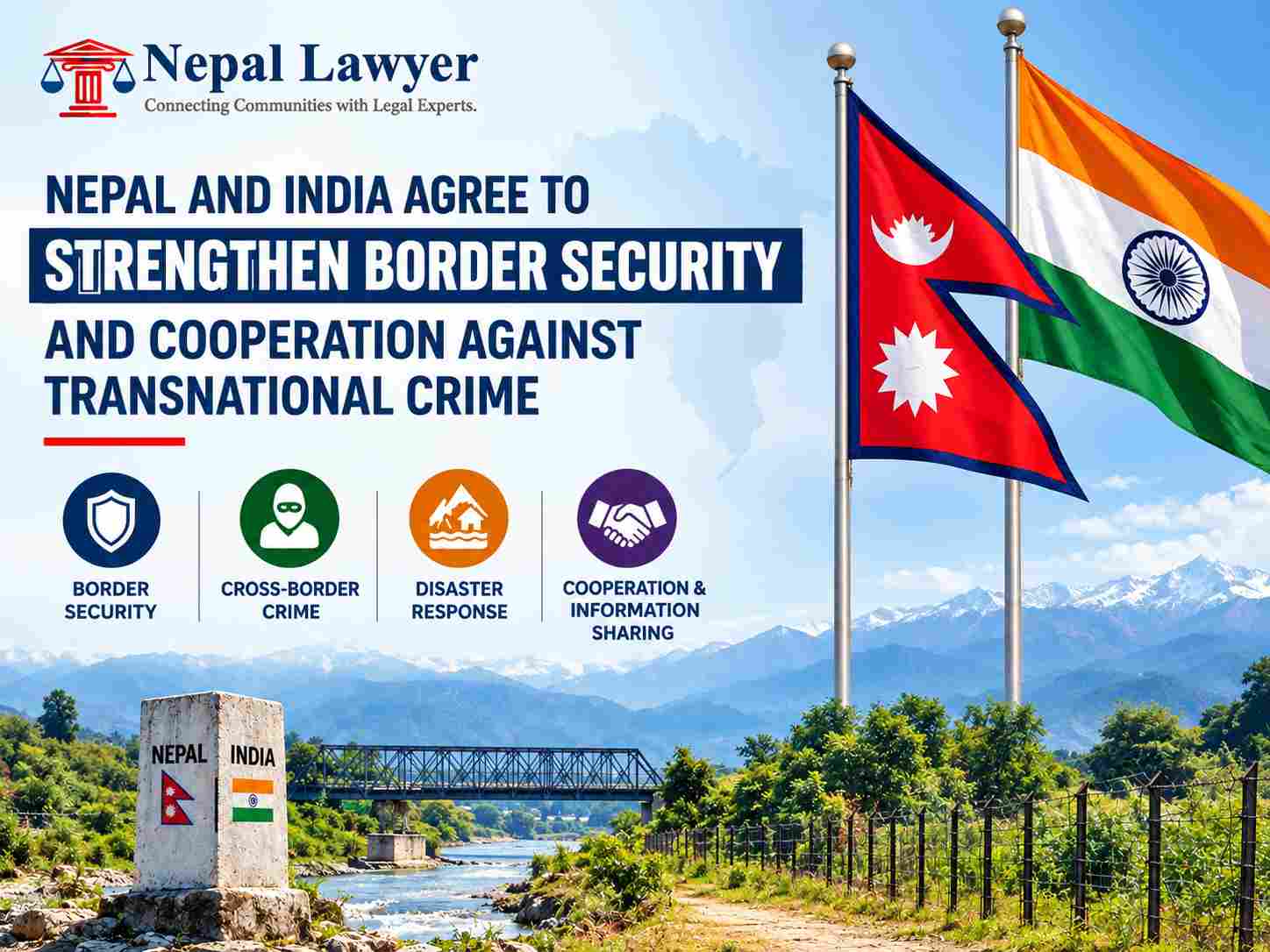
Kathmandu, Ashoj 28 - Nepal and India have agreed to strengthen cooperation on border security, cross-border crime and disaster response as officials from both countries discussed security challenges along their shared open border. Nepal’s Home Minister Sudan Gurung met Indian Home Minister Amit Shah in New Delhi on the sidelines of the inaugural BIMSTEC Home Ministers’ Meeting, where both sides discussed improving border management, enhancing information sharing and coordinating efforts to tackle transnational criminal activities.
Nepal and India share an approximately 1,850-kilometre open border, which allows citizens of both countries to travel across the border without passports or visas under longstanding bilateral arrangements. While the open border supports trade, employment and close social and family ties, it also presents challenges related to human trafficking, drug smuggling, illegal trade, counterfeit currency and organized criminal networks. Strengthening security cooperation is therefore an important area of bilateral engagement.
The latest discussions build on earlier agreements to improve Nepal-India border management and law enforcement coordination. During a Joint Working Group meeting in August, the two countries agreed to enhance coordination and real-time information sharing among security agencies. The discussions covered several cross-border offences, including narcotics trafficking, trafficking in controlled medicines, wildlife trafficking, human trafficking, counterfeit currency, arms smuggling, cybercrime and digital fraud.
Disaster preparedness and emergency response were also key areas of discussion. Floods and landslides in either country can affect communities, roads, rivers and infrastructure across the border, highlighting the importance of timely information sharing and coordinated rescue operations. During the meeting, Gurung thanked India for its assistance following recent floods and landslides in Nepal, underscoring the role of bilateral cooperation in disaster response and humanitarian support.
The meeting was held during the inaugural gathering of Home Ministers from the Bay of Bengal Initiative for Multi-Sectoral Technical and Economic Cooperation (BIMSTEC). The regional organization comprises Nepal, India, Bangladesh, Bhutan, Myanmar, Sri Lanka and Thailand. Its cooperation agenda includes addressing organized crime, human and drug trafficking, cybercrime, terrorism and disaster management, providing a regional framework for countries to coordinate responses to shared security challenges.
For Nepal, closer coordination with India remains significant because the open border facilitates substantial daily movement of people, goods and services. Cooperation between law enforcement agencies can help identify criminal networks and address illegal activities while supporting legitimate cross-border travel, trade and social relations. The discussions highlight the importance of combining effective border security with information sharing, victim protection, action against illegal trade and coordinated disaster response.
Source: The Kathmandu Post