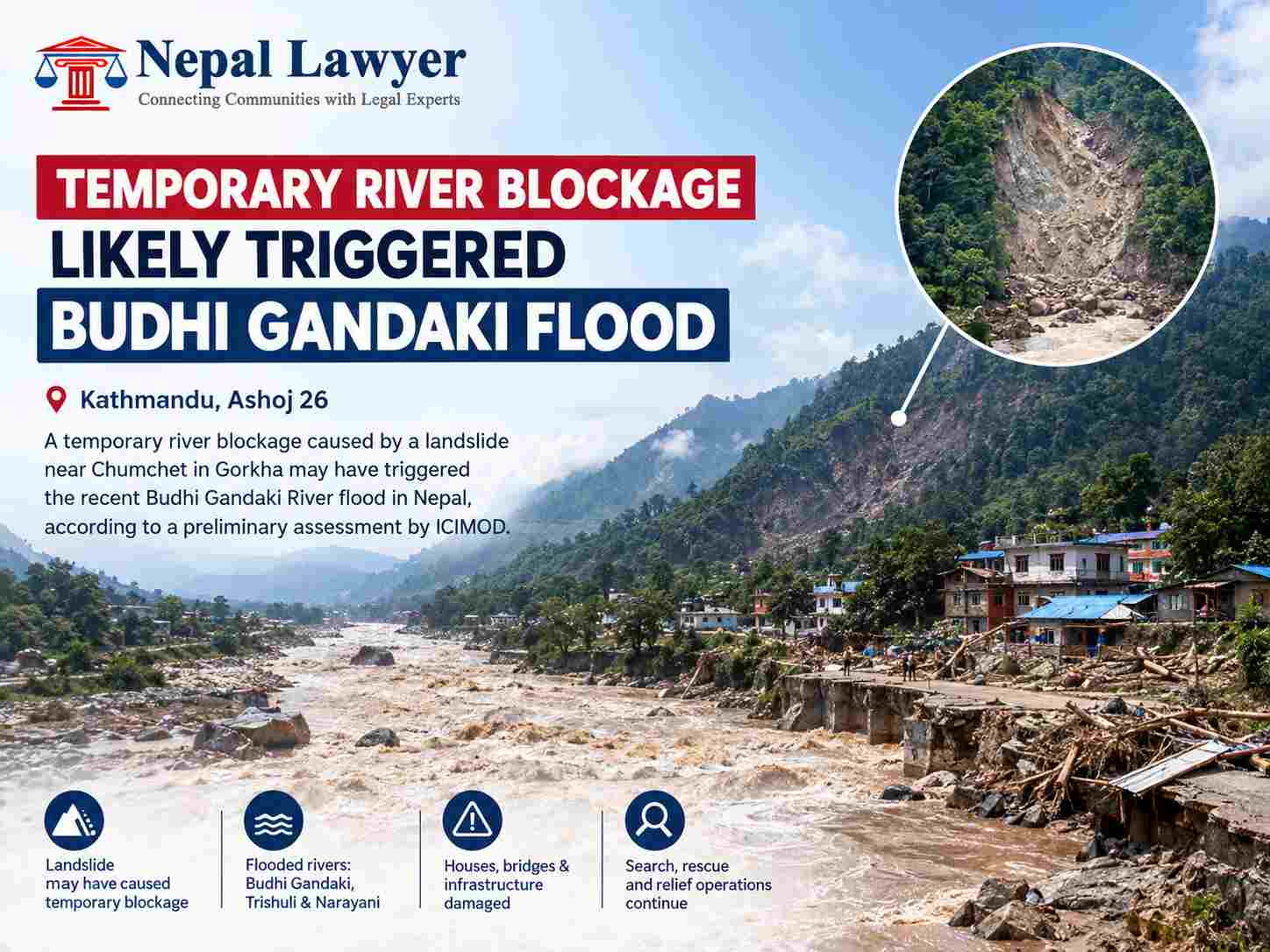
Kathmandu, Ashoj 26 - A temporary river blockage caused by a landslide near Chumchet in Gorkha may have triggered the recent Budhi Gandaki River flood in Nepal, according to a preliminary assessment by the International Centre for Integrated Mountain Development (ICIMOD).
The flood began at around 4:00 a.m. on October 11, carrying large amounts of mud, sediment and debris downstream. Authorities subsequently issued warnings to communities along the Budhi Gandaki, Trishuli and Narayani river systems as water levels fluctuated.
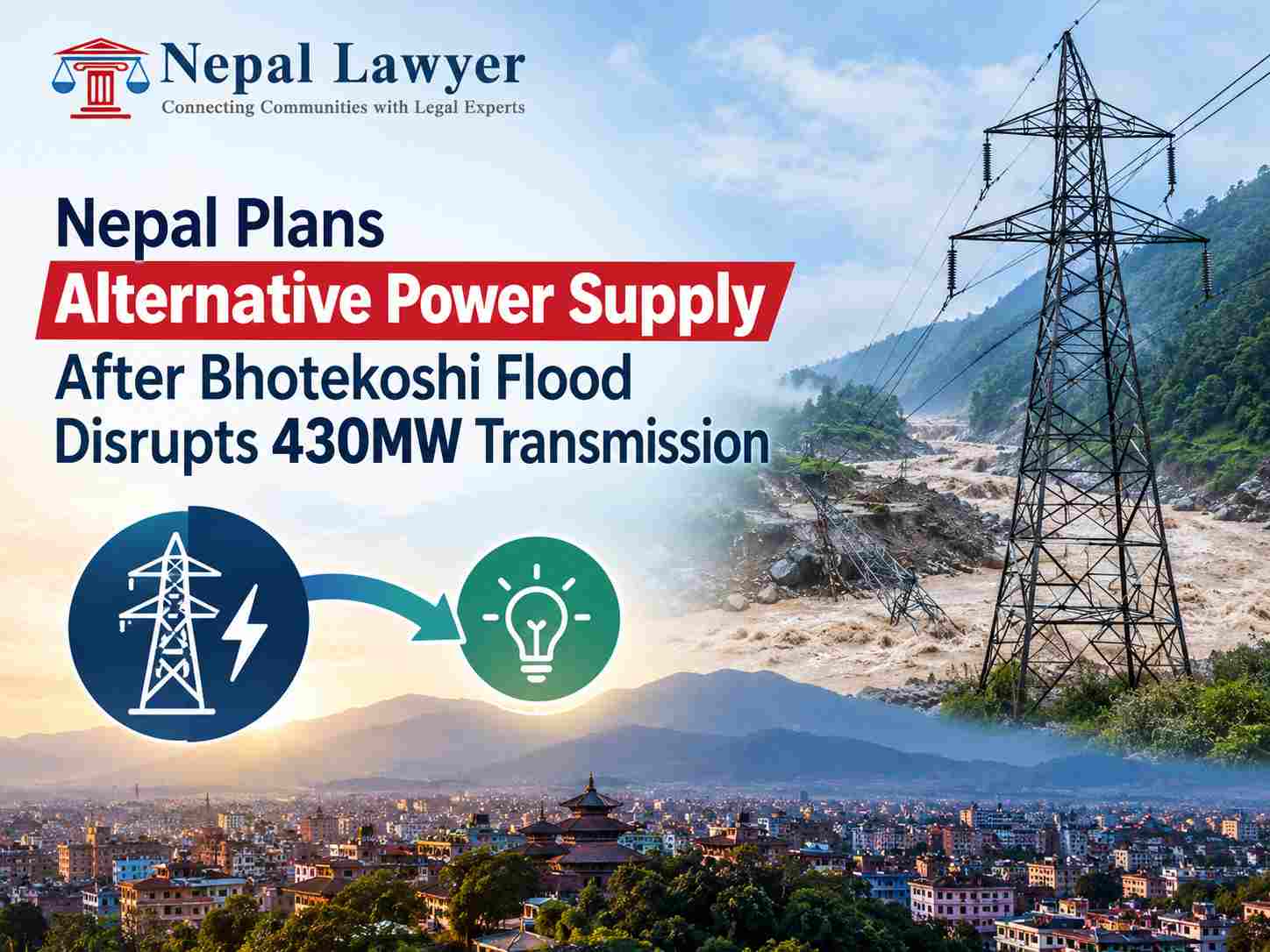
Preliminary reports indicate that several people remain missing, while houses, bridges and other riverside infrastructure have been damaged or swept away. The 341-megawatt Budhi Gandaki Hydropower Project site at Salleri in Gorkha also sustained damage. Search and rescue, evacuation and relief operations are continuing in the affected areas.
According to ICIMOD’s initial analysis, a landslide may have temporarily blocked the river, forming a natural dam. The subsequent failure of this blockage may have released accumulated water and debris downstream, triggering the destructive flood. However, the findings remain preliminary, and authorities are continuing to investigate the exact cause and extent of the disaster.
The incident has renewed concerns about flood risk monitoring and early-warning systems in Nepal’s mountainous regions. Under the Disaster Risk Reduction and Management Act, 2074, authorities have responsibilities relating to disaster-risk monitoring, information dissemination, early-warning systems, preparedness, rescue and relief. Local disaster management committees are also required to develop and operate local disaster-information and early-warning systems.
Similarly, the Local Government Operation Act, 2074, assigns local governments responsibilities for disaster preparedness and response, early-warning systems, search and rescue, relief coordination, river management and landslide control.
ICIMOD has emphasized the importance of monitoring landslides and river systems together, particularly in steep Himalayan catchments where natural hazards can develop rapidly. Understanding how temporary river blockages form and collapse could help improve flood forecasting, early-warning mechanisms, infrastructure planning and disaster preparedness, reducing risks to downstream communities in future events.
Source: Republica