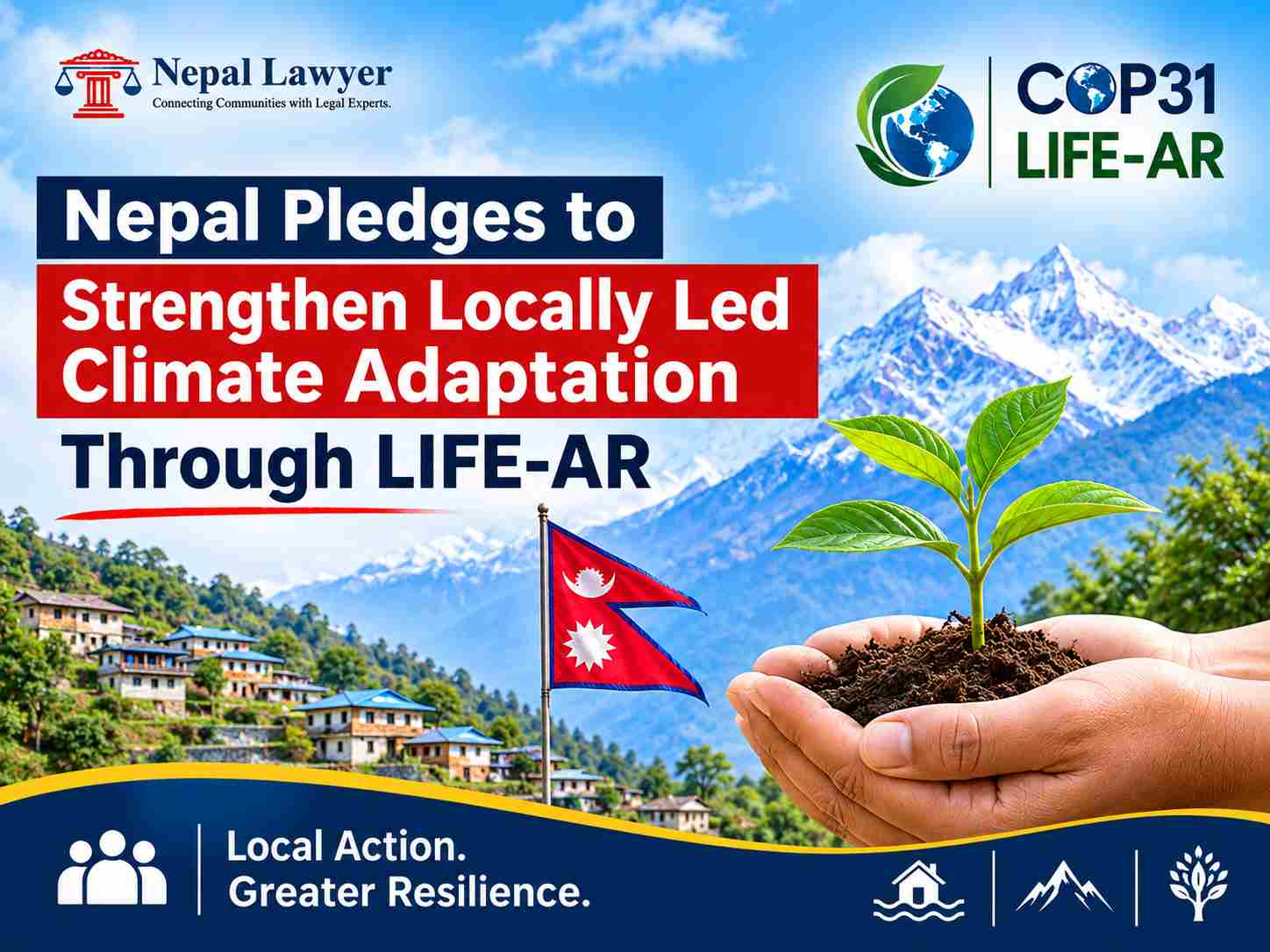
Nepal has renewed its commitment to promoting locally driven climate adaptation through the Least Developed Countries Initiative for Effective Adaptation and Resilience (LIFE-AR), with a particular emphasis on allocating climate resources to vulnerable communities. The project seeks to guarantee that local governments and communities have an active part in climate planning, decision-making, and the implementation of adaptation measures tailored to their individual requirements.
On November 11, the Minister for Agriculture, Forestry, and Environment made an official statement about the LIFE-AR Facility at the 31st Conference of the Parties (COP31). Geeta Chaudhary described the effort as more than just a financing source. She emphasized its potential to transform the way climate action is planned, financed, and executed. She also mentioned Nepal's growing climate problems, particularly in mountainous areas, where residents face rising dangers despite the country's comparatively small contribution to global greenhouse gas emissions.
Referring to the terrible Rasuwa-Bhotekoshi tragedy on August 26, 2026, which was popularly dubbed a "Mountain Tsunami," Chaudhary emphasized the grave human, economic, and environmental consequences of climate-related disasters. According to preliminary estimates, at than 1,457 individuals died, with 5,285 still missing. Around 15,000 houses, totaling around 60,000 persons, were immediately affected. The anticipated recovery, rehabilitation, and reconstruction cost is USD 4.78 billion, or approximately 10% of Nepal's GDP. She emphasized the critical need for more accessible climate funding, stronger institutions, innovative technology, and better early warning systems.
Nepal signed a Memorandum of Understanding with LIFE-AR on May 8, 2026, and is currently working to create the facility. The government also aims to host the 15th LIFE-AR Board Meeting in Kathmandu next year, which would bring together member countries and key stakeholders. Chaudhary stated Nepal's commitment to develop local institutions, guarantee climate funding reaches the most vulnerable, and collaborate closely with international partners. She closed by confirming the government's commitment to implementing global climate pledges through community-led action and increasing resilience to future climate challenges.
Source: Nepal News