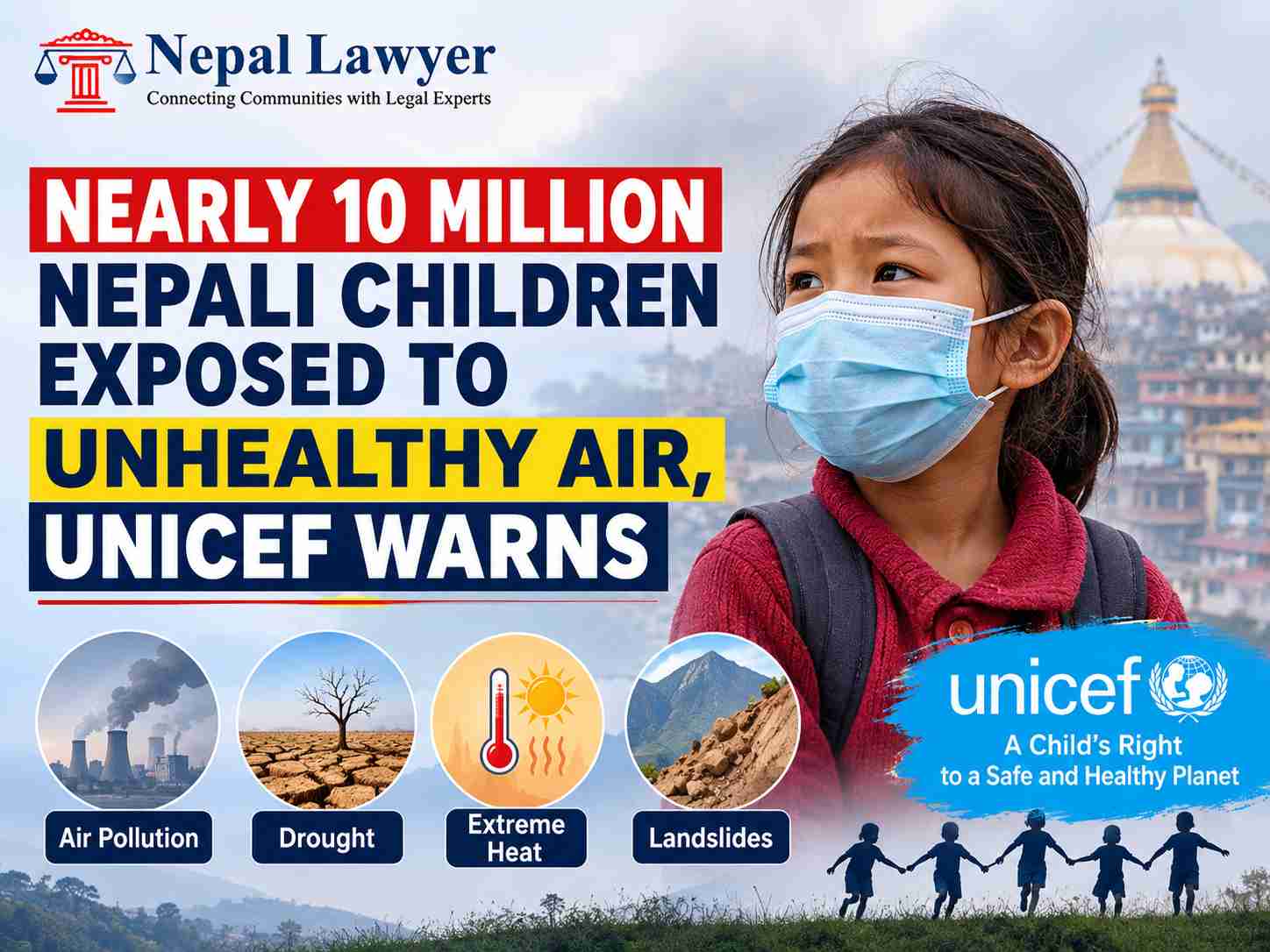
Kathmandu, Kartik 19 – Nearly 9.9 million children in Nepal are exposed to unhealthy levels of air pollution, while millions more face growing risks from drought, extreme heat, landslides and other climate-related hazards, according to a new UNICEF report.
The report, Growing Up in a Climate Hotspot: The Risks Shaping the Lives and Futures of Nepal’s Children, finds that 7.3 million children are exposed to drought, 5.7 million to extreme hot days and 2.9 million to rainfall-triggered landslides. Around 2.4 million children face multiple high-intensity climate hazards at the same time.
UNICEF warns that the impact goes beyond immediate environmental exposure. Climate-related disasters can disrupt healthcare, nutrition, education, drinking water and child-protection services, while also increasing risks of child labor, child marriage and disease outbreaks.
The report notes that only 47.5 percent of Nepal’s population has access to safely managed drinking water, while one in four children under five is stunted and 22 percent of children live in multidimensional poverty. Children living in poverty, remote areas and climate-vulnerable communities face particularly high risks.
UNICEF has described the climate crisis increasingly as a child-rights issue, arguing that children’s health, education, protection and development must be considered when governments design climate policies and allocate climate financing.
Nepal recently endorsed the Declaration on Children, Youth and Climate Action at the National Climate Summit on October 29. The declaration commits governments to recognize the rights, needs and participation of children and young people in climate action.
Ahead of COP31, UNICEF has urged Nepal to integrate children’s rights into climate adaptation, disaster-risk reduction and financing policies, while investing more in climate-resilient schools, health services, water and sanitation, nutrition and social protection.
The report highlights that air pollution and climate change are no longer only environmental concerns; they are increasingly affecting the health, education, safety and future rights of millions of Nepali children.
Source: The Kathmandu Post