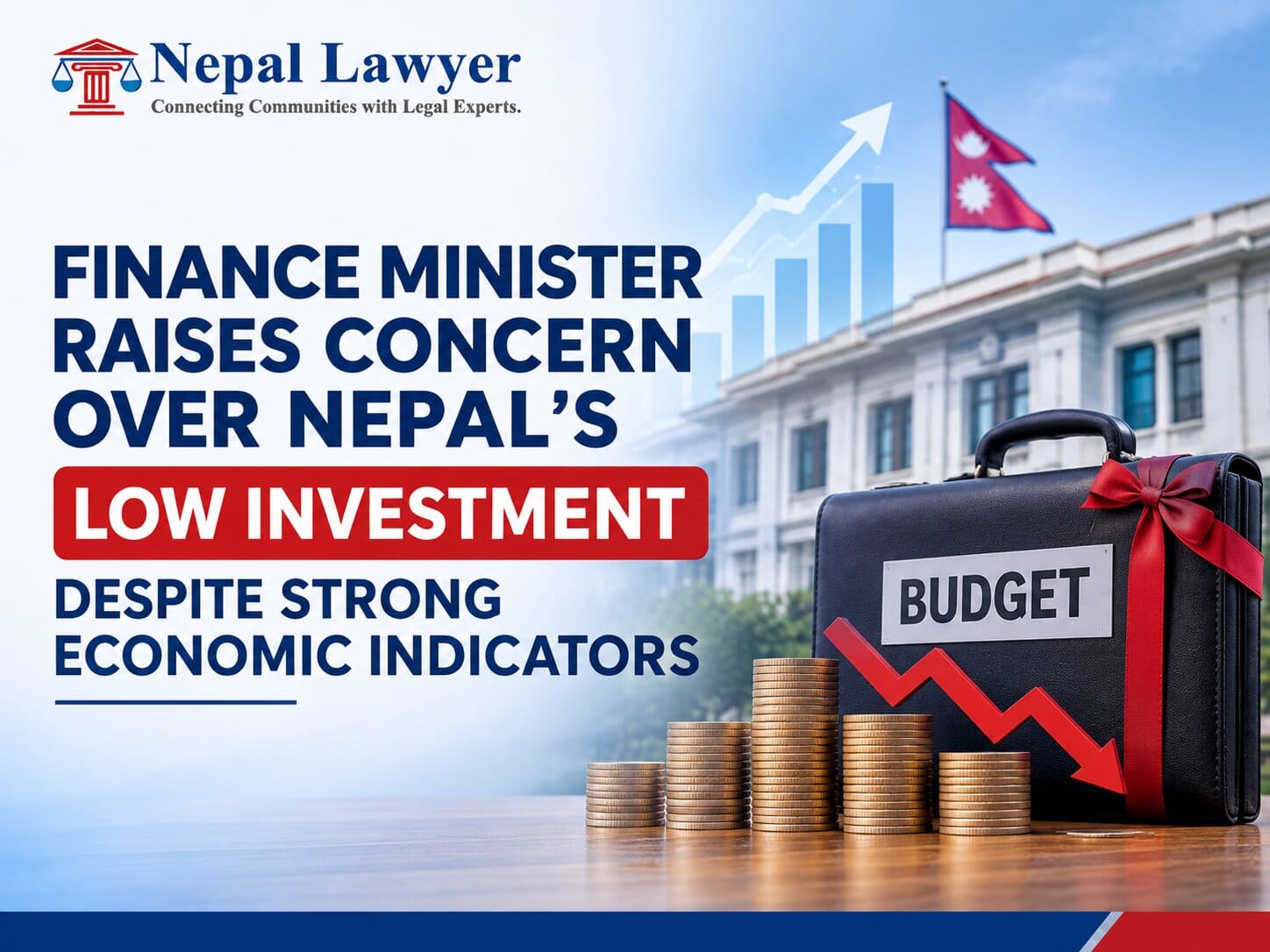
Kathmandu, Mangsir 2 – Finance Minister Swarnim Wagle has raised concern over Nepal’s continued low level of investment despite favorable macroeconomic conditions, saying the country has sufficient liquidity, stable interest rates and strong foreign exchange reserves but investment has still not increased as expected.
Speaking at the National Tax Day awards, Wagle said Nepal currently has foreign exchange reserves of around $30 billion, inflation remains under control and the banking system has adequate liquidity. According to him, these conditions should be capable of supporting significantly higher economic growth, yet private investment remains weak.
Business leaders, however, pointed to a different set of challenges. They identified policy instability, administrative delays, high operating costs, infrastructure gaps and market uncertainty as major reasons investors remain cautious about committing long-term capital in Nepal.
FNCCI President Anjan Shrestha also argued that Nepal’s tax burden remains comparatively high and called for lower tax rates to encourage businesses to expand, invest and generate employment. The private sector has repeatedly argued that improving access to finance alone is not enough if regulatory and operational barriers remain unresolved.
The event also recognized Nepal’s leading taxpayers. Surya Nepal was honored as the highest corporate income taxpayer for fiscal year 2025 - 26, while Raj Bahadur Shah received the award for highest individual income tax contribution. Companies from banking, tourism, IT, agriculture, hydropower, remittance and manufacturing were also recognized.
Bhat-Bhateni Supermarket received a special award for business resilience after rebuilding stores damaged during the September 2025 unrest. The company said 12 outlets were destroyed, causing around Rs11 billion in losses, but it continued paying employees and did not carry out layoffs. Ten of the affected stores have since reopened.
The discussion highlighted a broader issue in Nepal’s investment environment: while the country may have stable financial indicators and available capital, businesses still consider regulatory certainty, infrastructure, taxation and protection of investment when deciding whether to expand.
The government and private sector therefore face the challenge of turning Nepal’s improving macroeconomic position into actual investment, business expansion and job creation, rather than allowing available liquidity and capital to remain underused.
Source: The Kathmandu Post