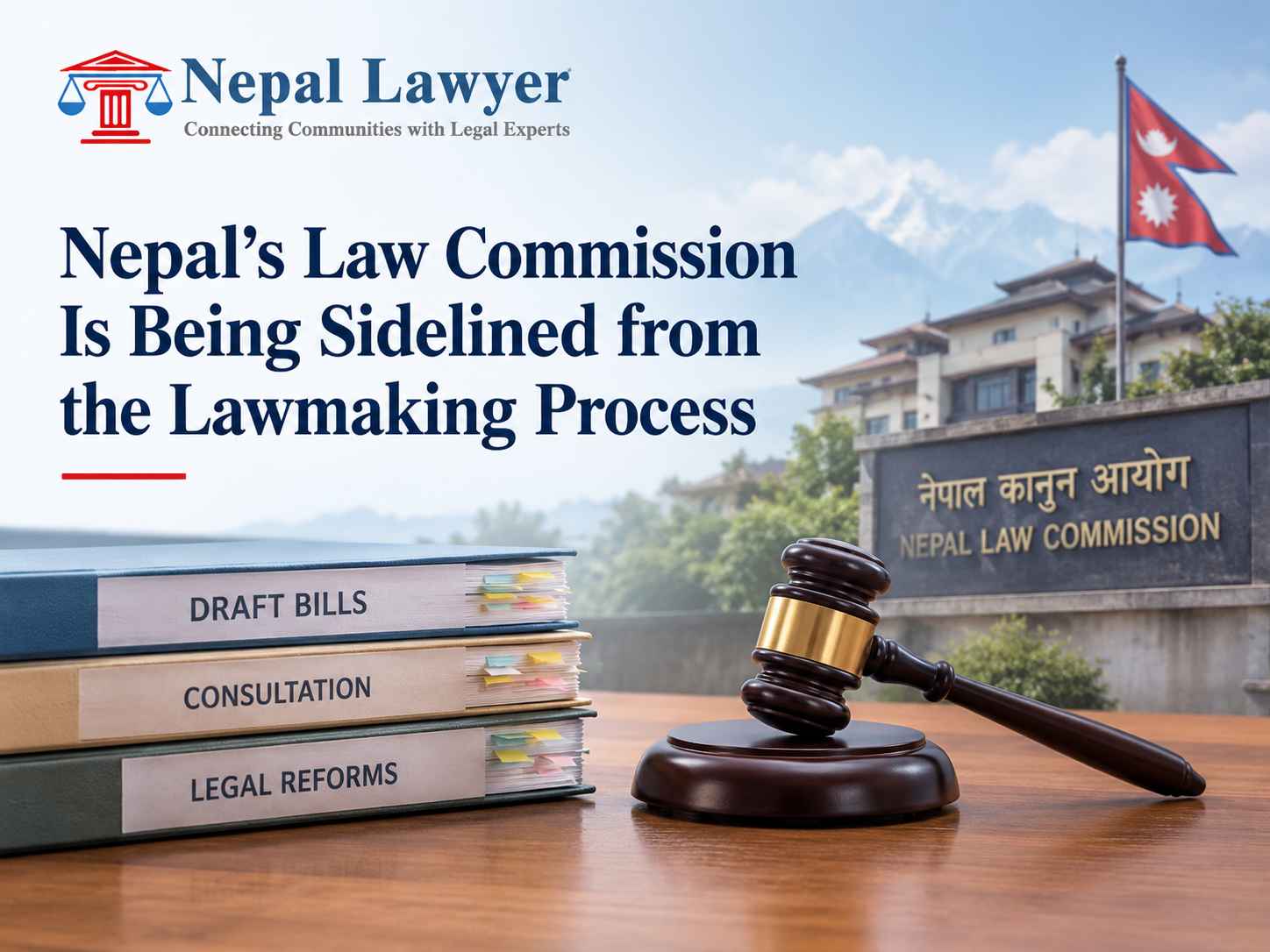
Kathmandu Ashoj 7 - There have been several complaints over the lack of consultation, lack of coordination, and controversial provisions in Nepal's law-making process that are only after bills reach Parliament. It is suggested that the Nepal Law Commission, created to assist in legal reform, is getting marginalized. The Commission conducts research on law reforms, evaluates current laws and drafts laws and facilitates coherence in law in Nepal.
The problem is not a lack of work from the Commission. According to its 2025 - 26 annual report cited by the newspaper, the Commission has prepared and submitted 43 draft bills to the government since the Constitution was promulgated in 2015. Yet around 95 percent of those drafts have still not become law.
Rather, draft legislation is generally prepared in advance by ministries of the government and by "privileged" individuals in the government bureaucracy, passes through the various Cabinet committees, and finally arrives at Parliament. A large part of this pre-legislative process is conducted without meaningful consultation with stakeholders that are affected, independent experts and professional institutions. The ramifications can start to materialize once bills go to Parliament. Some bills, such as the Media Council Bill, School Education Bill and Federal Civil Service Bill, have been controversial as groups affected by the bills have contended that they were never consulted during drafting.
There are three stages of good law making in Nepal: the pre-legislative stage (drafting of policy and legislation), the legislative stage (deliberation and enactment of legislation in Parliament) and the post-legislative stage (enforcement and evaluation of legislation). Consultation is particularly important in the lead up to the bill coming to Parliament as substantive changes can be made at this point.
An empowered role of Nepal Law Commission may facilitate in identifying the conflicting provisions, duplication, legal gaps and inconsistencies before the law is brought before law makers. The process of policy setting would remain with ministries but there might be more professional oversight on the drawing up of the legal instruments and their review. So, the bigger question is not just what laws are needed in Nepal, but how laws are researched, drafted and consulted before they become binding laws. Therefore, the Nepalese legislative process should be a regular affair of consultation with the Law Commission and not too occasional.
Source: The Kathmandu Post