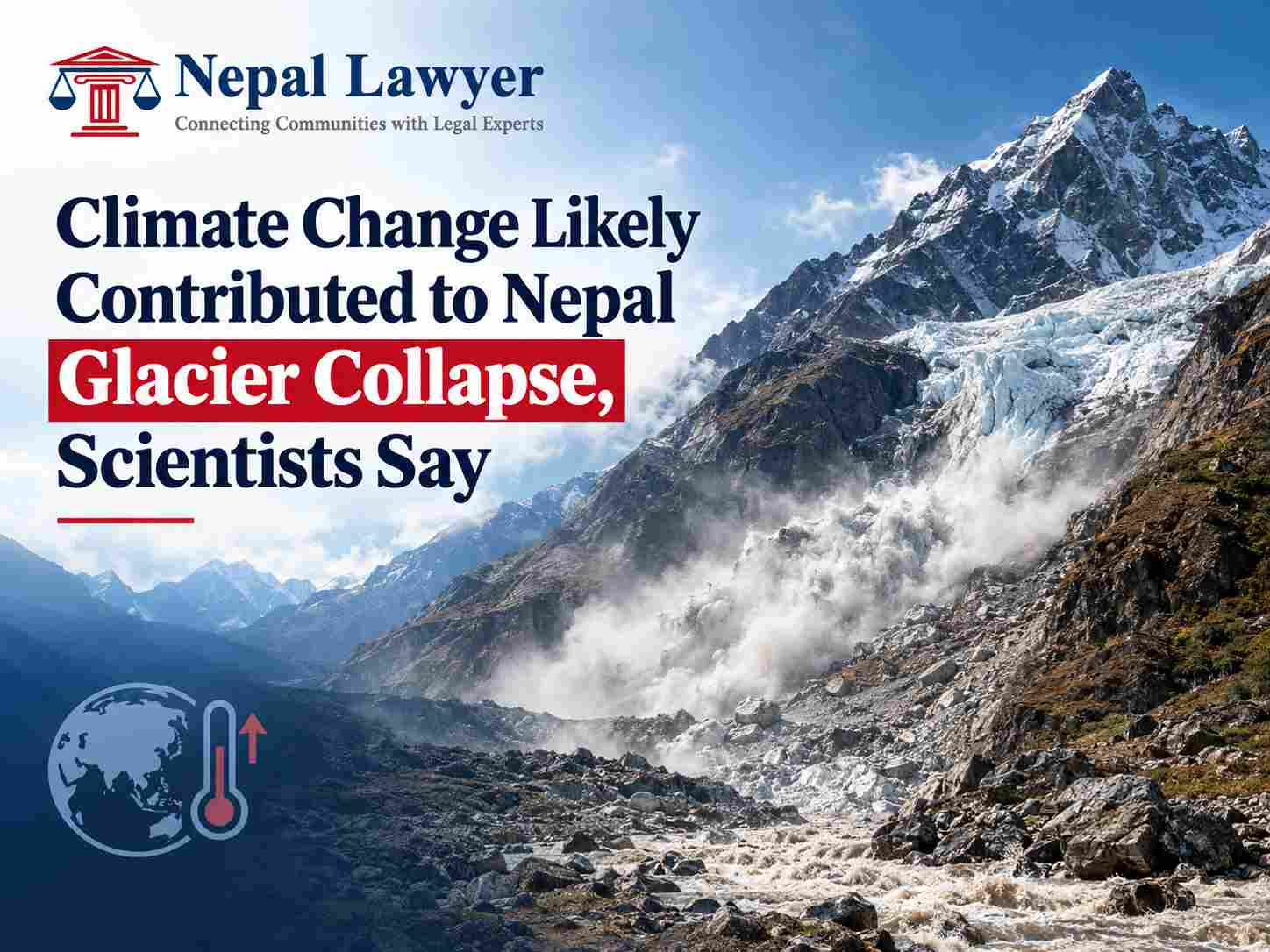
KATHMANDU, SEPTEMBER 17 According to scientists, rising temperatures, decreasing glaciers, thawing permafrost, and greater meltwater created conditions that made the calamity more plausible. The fall of around 2 square kilometers of rock and glacial ice on Langtang Lirung mountain caused devastating flooding in regions of Nepal and Tibet, killing approximately 1,400 people and leaving hundreds missing.
Researchers from the World Weather Attribution (WWA) claimed the specific impact of climate change in precipitating the collapse is unknown because geological and climatic causes combined. However, they discovered that Himalayan temperatures in August were almost 5 degrees Celsius above average, with human-caused climate change accounting for roughly 1.5 degrees Celsius of the rise.
According to the study, glaciers in the region have thinned by around half a meter per year since 2000, and thawing permafrost may have damaged the underlying rock. Unusually heavy snowfall in October and November of last year boosted the quantity of meltwater accessible as temperatures rose, potentially increasing pressure on the unstable slope.
A 7.8-magnitude earthquake in 2015 may also have undermined the underlying bedrock, though scientists say the exact role is unknown. The collapse was caused by a combination of circumstances, including long-term glacier and permafrost erosion, extreme warmth, and extra meltwater, which exacerbated an already unstable Himalayan slope.
Source: The Kathmandu Post