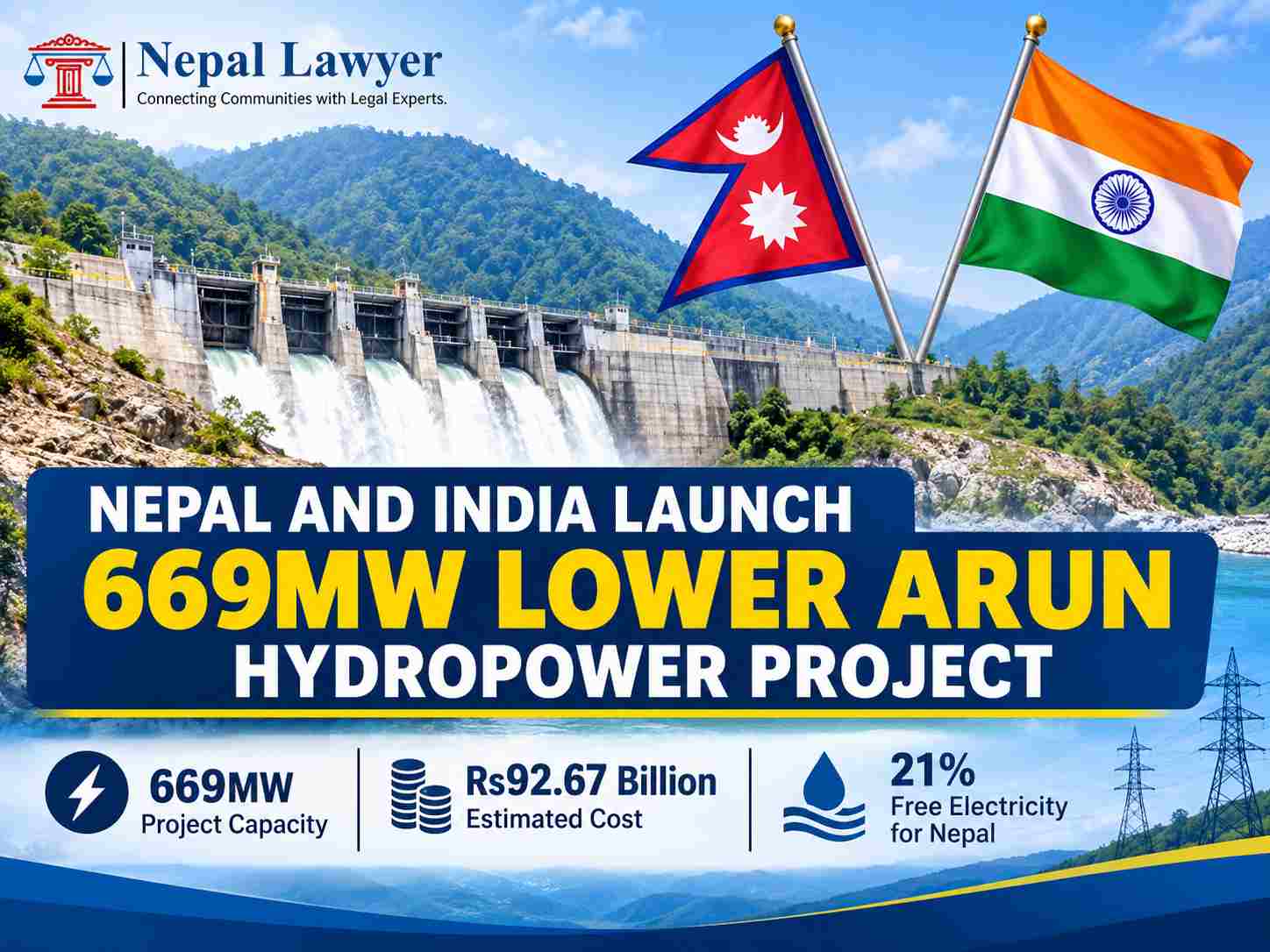
Kathmandu, Mangsir 8 – Prime Minister Balendra Shah and Indian Prime Minister Narendra Modi have jointly laid the foundation stone for the 669MW Lower Arun Hydropower Project, moving the long-delayed project closer to the construction stage. The ceremony was held virtually from Hyderabad House in New Delhi.
The project is estimated to cost around Rs92.67 billion and will use water discharged from the 900MW Arun-3 Hydropower Project. The water will be carried through a 17.4-kilometre tunnel to the Lower Arun powerhouse for electricity generation.
Under the project arrangement, Nepal will receive 21 percent of the electricity generated free of charge. The developer will also pay capacity and energy royalties to the government. For the first 15 years of commercial operation, the capacity royalty will be Rs. 400 per kilowatt and the energy royalty 7.5 percent, increasing thereafter.
The project is being developed by SJVN Lower Arun Power Development Company, a subsidiary of India’s state-owned Satluj Jal Vidyut Nigam. Two major construction packages covering tunnels, access roads and other infrastructure have already been awarded. However, the project has not yet achieved financial closure, which remains an important step before full-scale construction can proceed.
Land acquisition and compensation have also progressed. Of the 268 households directly affected by the project, 253 have received compensation, amounting to around Rs999.8 million. Preparatory work has already begun using the developer’s own investment.
Lower Arun was first promoted as an investment opportunity at the 2018 Nepal Investment Summit, and the Investment Board awarded the project to SJVN in January 2021. The formal Project Development Agreement was signed on June 1, 2023, during the India visit of then prime minister Pushpa Kamal Dahal.
The foundation-stone ceremony marks an important step toward construction, but the project’s progress will now depend on completing financial closure, implementing the awarded contracts and addressing remaining project-development requirements.
Source: The Kathmandu Post