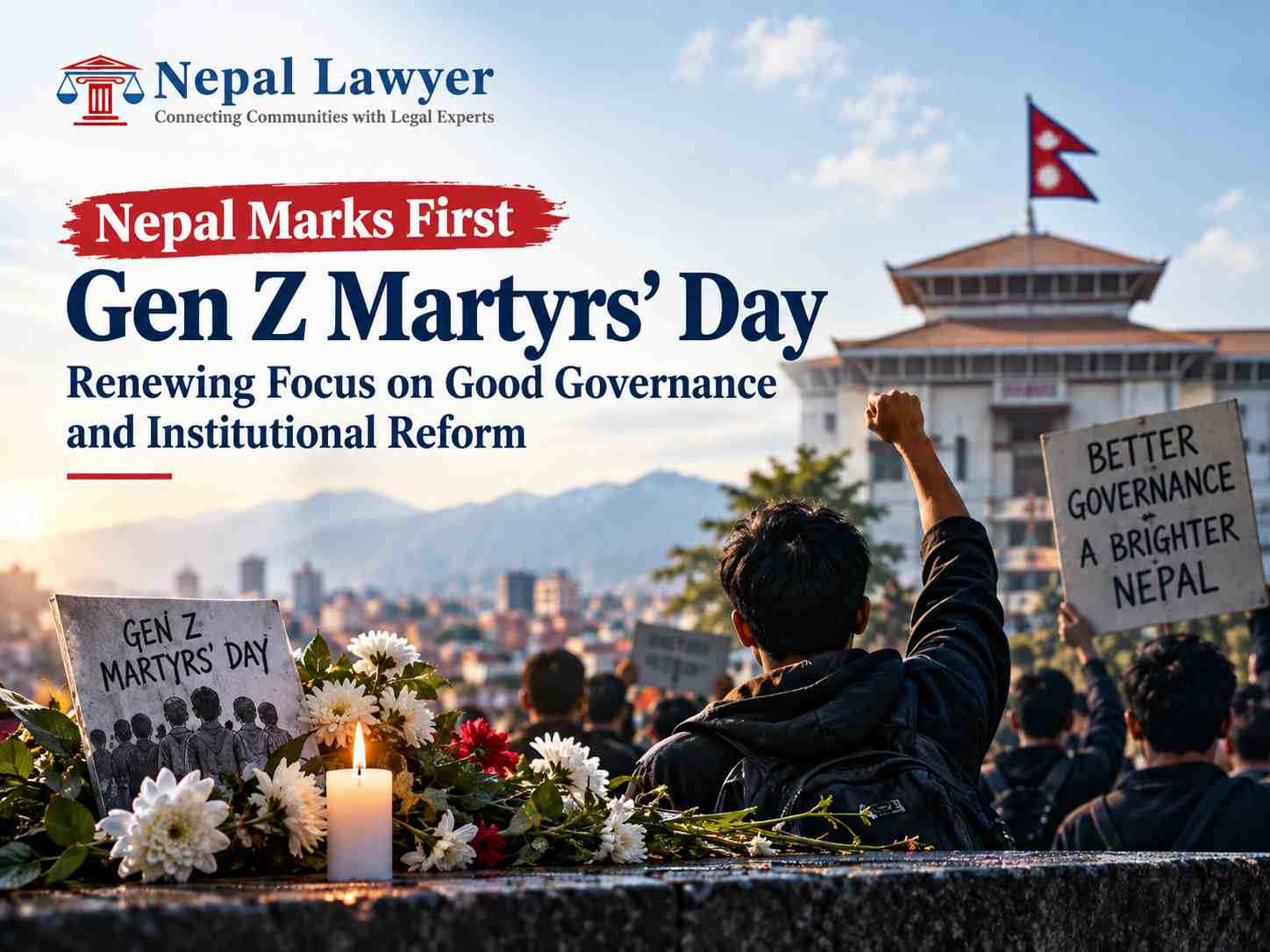
Kathmandu, Bhadra 23 - Nepal is observing its first Gen Z Martyrs' Day on Bhadra 23 (September 8) marking one year since the youth-led Gen Z movement that triggered major political changes in the country. A National Day of Mourning has been declared in honor of those who died in the movement. Initially the protests started for blocking social media platforms but expanded to a general campaign against corruption, nepotism, unemployment, inequalities in opportunities and shortcomings in public services delivery. The young protesters also called for more political accountability, transparency and meaningful involvement of the youth in state affairs.
Eventually, the movement had a political impact on Nepal. An interim government was established under the leadership of the former Chief Justice Sushila Karki and then the election was held on March 5, 2026, which was won with a solid mandate by emerging political players. The current government led by Prime Minister Balendra Shah has identified good governance, corruption control, administrative reform and digital transformation as its priorities, and the changes as steps under the agenda to address the concerns raised in the Gen Z movement.
Since then, a number of institutional changes have been adopted. The number of federal ministries has been reduced to 18, with the government estimating annual savings of around Rs20 billion. The use of digital platforms, like the Nagarik App, which integrate government services is also on the rise, and administrative restructuring and merit-based appointments are encouraged as tools to enhance efficiency, accountability and public service.
But the first anniversary has also raised doubts about whether the promises of the Gen Z movement have made any real difference to those who have been most impactedInjured protesters and families of those killed during the uprising say commitments related to medical treatment, employment and other forms of support remain incomplete Justice and the realization of the demands of the movement for them is not enough simply because of political change.
Therefore, the importance of Gen Z Martyrs' Day goes beyond a mere remembrance. The impact of this movement on the long-term will be not just the shift in political governance, but how far Nepal can go in creating stronger institutions, transparent decision-making, accessible public services, public trust in the state and job opportunities. The question one year later is how one can bring the demands raised on the streets into the permanent institutional changes and practical improvements of people's daily lives.