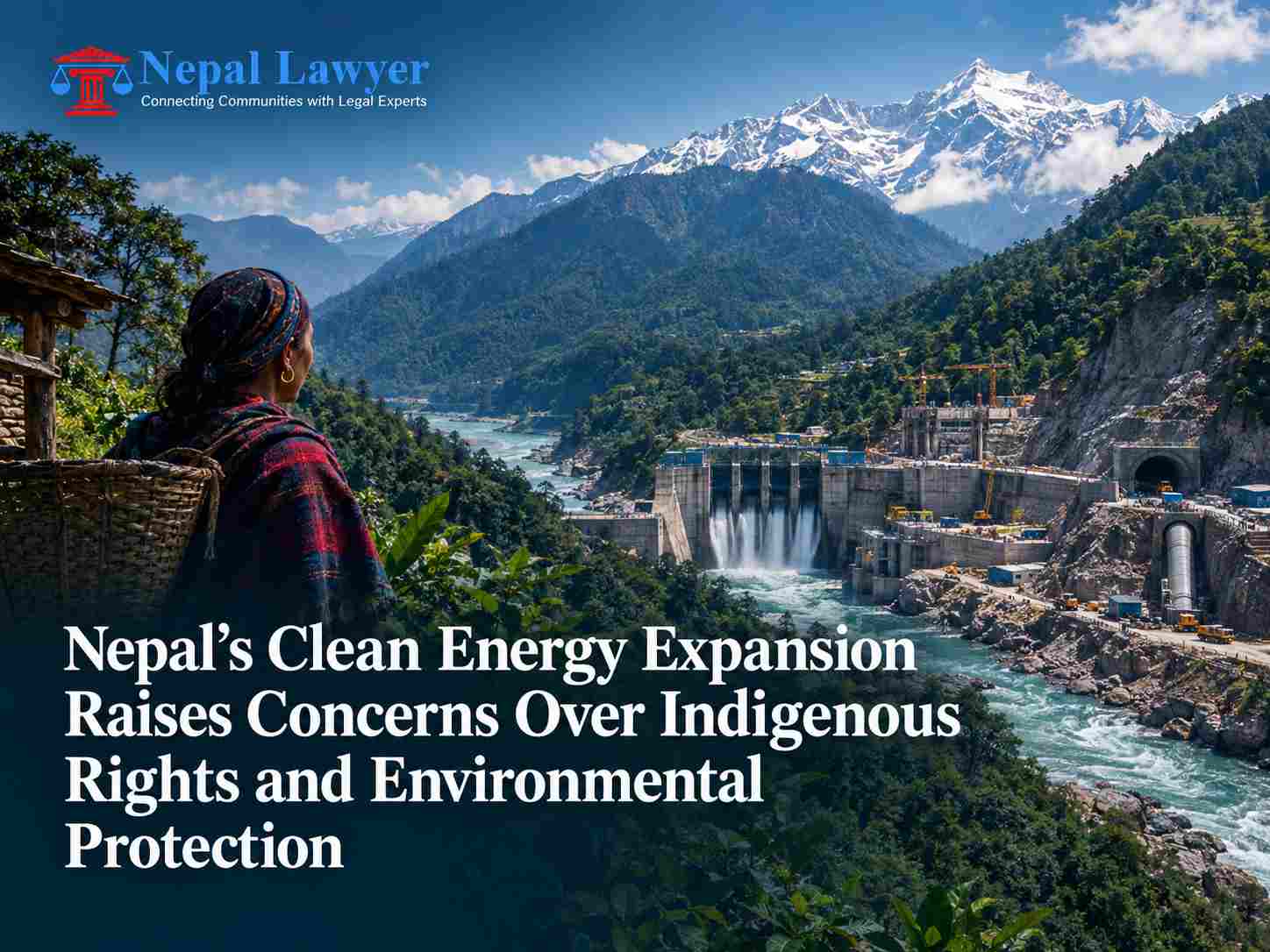
Nepal’s ambitious push to become a regional clean-energy powerhouse is facing growing scrutiny over the impact of hydropower development on Indigenous communities, ancestral land and fragile Himalayan ecosystems. In Sankhuwasabha, members of the Indigenous Bhote Singsa community report that hydropower projects are being developed on the Arun River basin without sufficient participation and consultation with them on decisions that impact their land, livelihood and cultural heritage.
Nepal aims to generate 28,500 MW of electricity, with estimated $46.5 billion investment, over the next decade. There were over 197 hydropower plants in operation as of July 2026 and 262 construction licences and 244 survey licences. The fast pace of hydropower development in Nepal is targeted towards fulfilling the growing domestic electricity demand as well as exports and trade with India and Bangladesh.
However, the Chhujung Khola Hydropower Project has reignited queries around community consultation and the participation of Indigenous people in hydropower development. The Kathmandu Post quotes residents saying that there had been a public hearing in 2022 during the winter migration when many families had moved to lower regions. Although the project impacts 232 households in Chyamtang, Ridak and Thudam, the project's Environmental Impact Assessment had 61 signatures from Chyamtang. Some residents also indicated that they were not fully aware of the technical documents they were required to sign. The project developer, however, insists that the project would not have gone forward without local support.
The controversy also poses significant legal issues related to the rights and interests of the Indigenous peoples and their involvement in the development initiatives of Nepal. In 2007, the Government of Nepal ratified International Labour Organization Convention No. 169, which calls for consultation with Indigenous peoples' representatives through their representative institutions when decisions are considered which directly affect their lives. Local residents have objected to the project in court, claiming "deficiencies" in the consenting process and environmental assessment. There is still no admission of wrongdoing by the developer, and the allegations are disputed.
The hydropower controversy has now grown into a new dimension on environmental issues. Within the Chhujung watershed, there are 26 glacial lakes and the watershed is located in the Lungba Samba Biocultural Heritage Special Conservation Zone. The project's Environmental Impact Assessment shows that it will require large-scale blasting and tunnelling operations very close to the glacial lakes. Environmentalists and residents have raised concerns that the assessment does not sufficiently consider risks to forests, wildlife, forage resources and the broader watershed. The Environment Protection Act of Nepal mandates environmental assessment for projects that have environmental impacts and government authorities have recognized that project activities cannot legally be performed beyond the scope of EIA.
The worries are not confined with the Chhujung Khola hydropower project. Other projects in Nepal, such as Upper Trishuli-1, the Upper Arun and Tanahu have been subject to similar consultations and displacement claims, as well as compensation and Indigenous rights issues. The central issue as Nepal moves towards RE is to be aware that any development of hydropower will not be at the cost of the communities residing in the production areas. The focus of the debate is now moving from the need for Nepal to grow clean energy to how hydropower development can take place without infringing on Indigenous rights, environmental protection, ancestral land and meaningful community participation.
Source: The Kathmandu Post