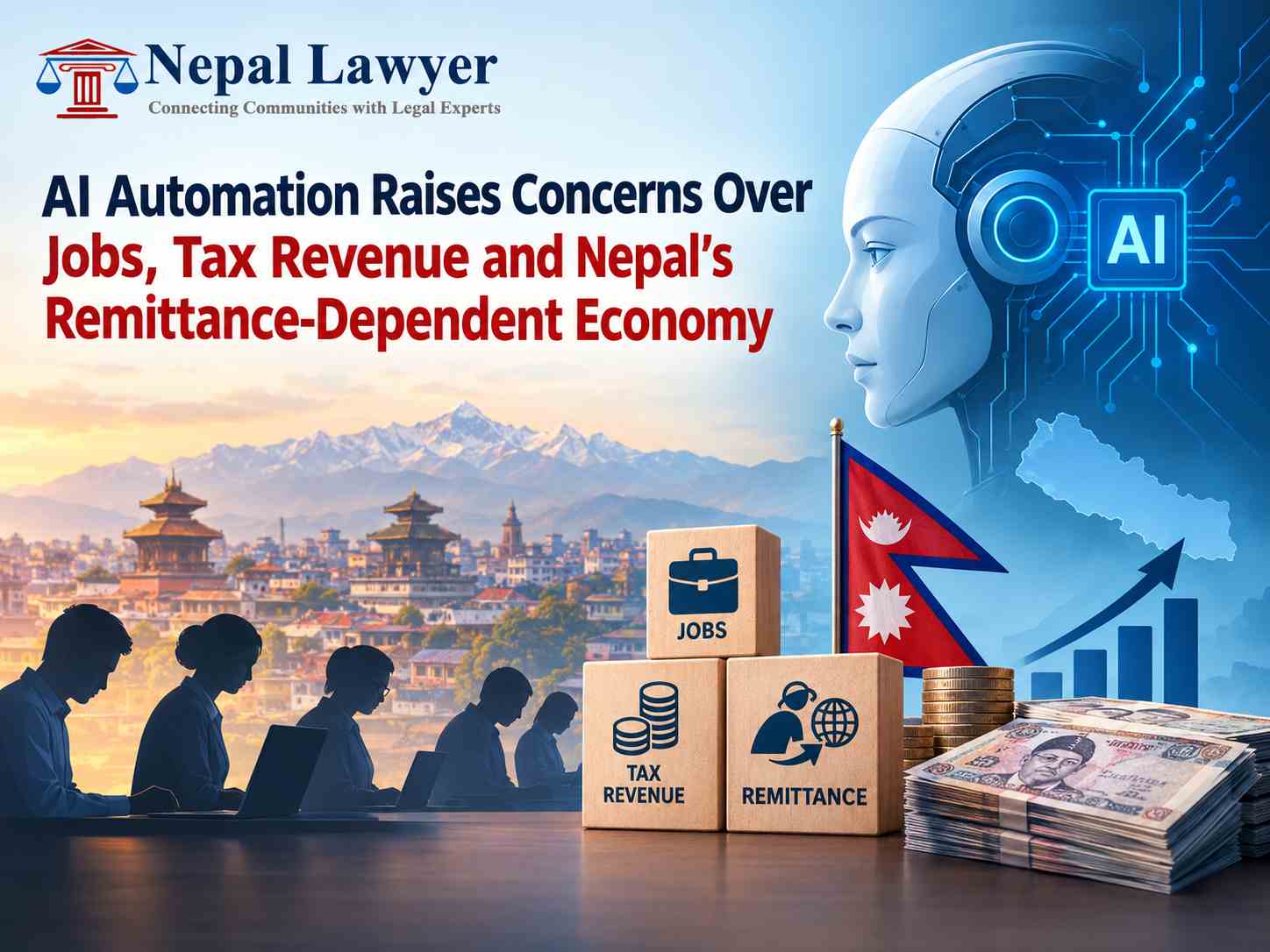
Kathmandu, Ashoj 14 - Nepal's increasing use of artificial intelligence (AI) could provide significant productivity and public service benefits, but also pose new work and income, and remittance-reliant economy, pressures.
Nepal's National AI Policy 2025 has sparked doubts regarding its ability to adequately tackle the economic risks of the widespread adoption of automation in Nepal, according to an opinion published in The Kathmandu Post. The policy focuses on boosting productivity, modernizing public services, and equipping workers with skills for an AI era, but the prospect of AI taking over their jobs is given less emphasis. Employment is already a serious problem in Nepal, and tax revenues make up a major percentage of the government's revenue, and remittances are a significant part of the economy.
One of the sectors that may be most affected by the swift changes being driven by AI is the IT and software sector in Nepal. Nepal's IT and software services exports are estimated to be worth nearly $1 billion annual, but as AI becomes more advanced, there may be a shift towards the demand for skilled workers and routine digital tasks being diminished. Eventually, other white-collar jobs may be affected by the same disruption and in the long run, the same could happen if there are other physical and repetitive jobs that are improved by robotics.
The discussion highlights the need to give due consideration to the challenges and economic implications of automation in the context of Nepal's AI policy. This can range from regular reviews of AI's effects on jobs, to scaling up retraining and reskilling opportunities, to even considering new methods of taxation if jobs-based tax is threatened. Policymakers can also consider the impact of economic activity created by using AI-based services in Nepal on its tax revenues in the coming years. The problem in the end points out a bigger problem in Nepal's AI future.
Balancing technological development with job creation, protection of the workforce, social security and sustainable public finances will be a challenge for the country as AI becomes more common use. If AI automation has a significant impact on employment, it may ripple through the economy beyond the tech industry, especially when considering the impact of taxation and overseas remittances.
Source: The Kathmandu Post