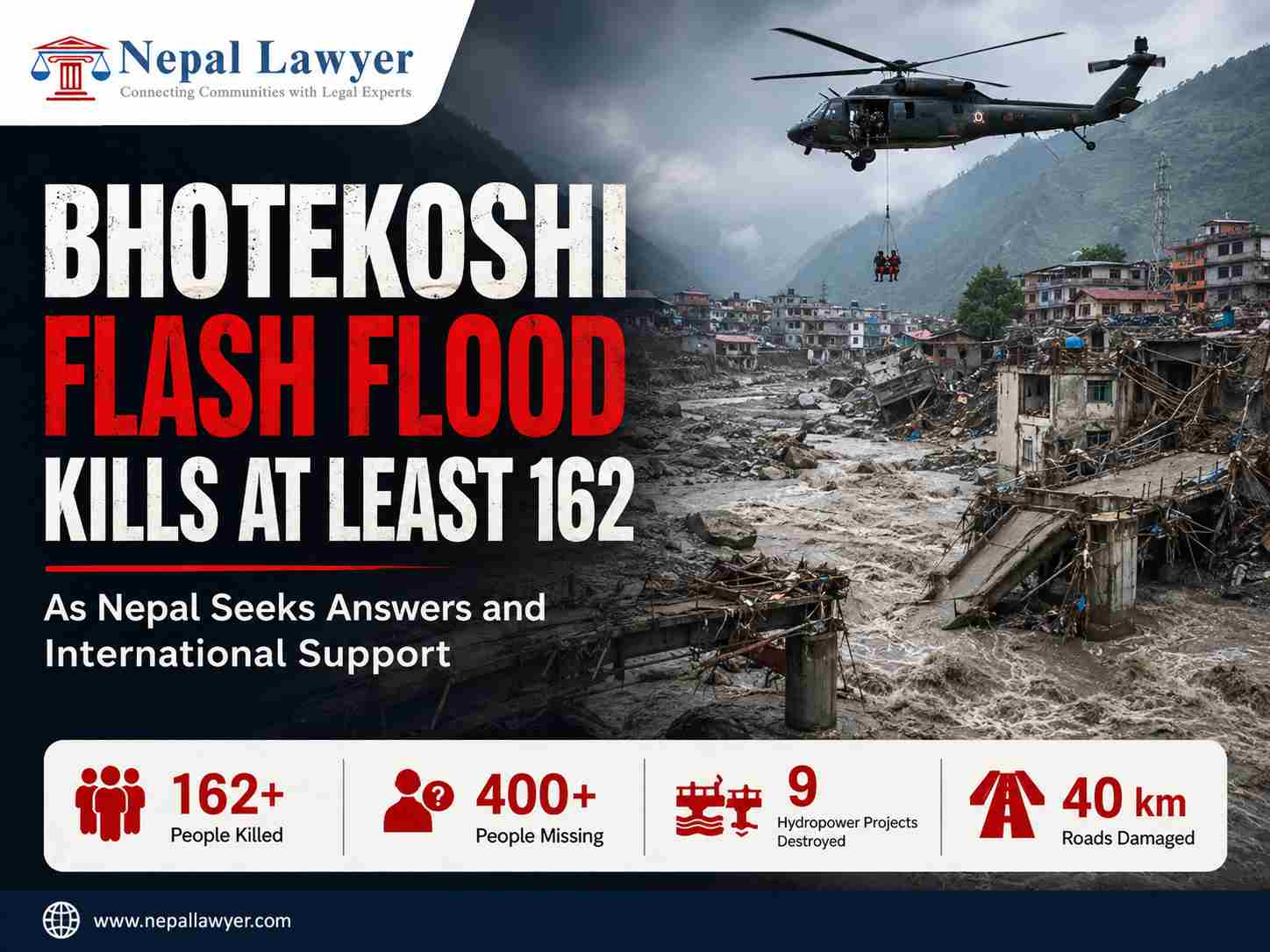
Kathmandu, Bhadra 11 - The flash flood in Bhotekoshi river has been the most fatal in a long time for Nepal, having killed at least 162 people and left nearly 400 others missing, including foreign tourists and security forces.
The water began to attack Rasuwa on Wednesday and went downstream through a number of settlements, wiping out houses, roads, bridges, hydropower projects and other public and private infrastructure. Initial estimates suggest that the disaster was likely caused by an avalanche or glacial rock slide on the Tibetan side of the Nepal-China border, that appears to have blocked the Lhende tributary, releasing a huge amount of water and debris into the Bhotekoshi. Just before the flood, there was also a tremor with magnitude 4.4 in Tibet, but officials said the reasons for this earthquake remain to be investigated.
The scope of the damage to infrastructure is massive. Initial reports say 9 hydropower projects, 9 commercial banks and 19 motorable bridges were destroyed or swept away and approximately 40 kilometres of road were damaged. It was also reported that over 300 vehicles and trucks waiting at the customs point at Rasuwagadhi were also washed away. The disaster has also brought to the forefront issues with regard to Nepal's early-warning systems and cross-border disaster-information systems.
Nepal and China signed a memorandum of understanding on DRR and emergency response in 2019, but sources said that the authorities in Rasuwa did not receive advance warnings before the flood hit Nepal. The upper Bhotekoshi was swept by the flood, preempting the automatic monitoring stations from sending alerts. Now after the disaster, Nepal has approached Chinese authorities and research organizations for real time data and information to know the reason for the flood. Discussions have also taken place between Nepal and China on enhancing information sharing, including the notification of Nepal if water levels start to rise on the Chinese side of the border.
The disaster has again raised the demand for a better early-warning system on the border which can warn the downstream community in advance from such bad data. The international community, including India, China, the US and the World Bank, has responded with assistance in the process of rescue, relief and recovery. Authorities are still searching for missing individuals and determining the full damage in Nepal while assessing the aid needed. The Bhotekoshi disaster has also underlined the need for better preparedness for natural disasters, real-time monitoring and cross-border cooperation in the ever more vulnerable Himalayas of Nepal.
Source: The Kathmandu Post