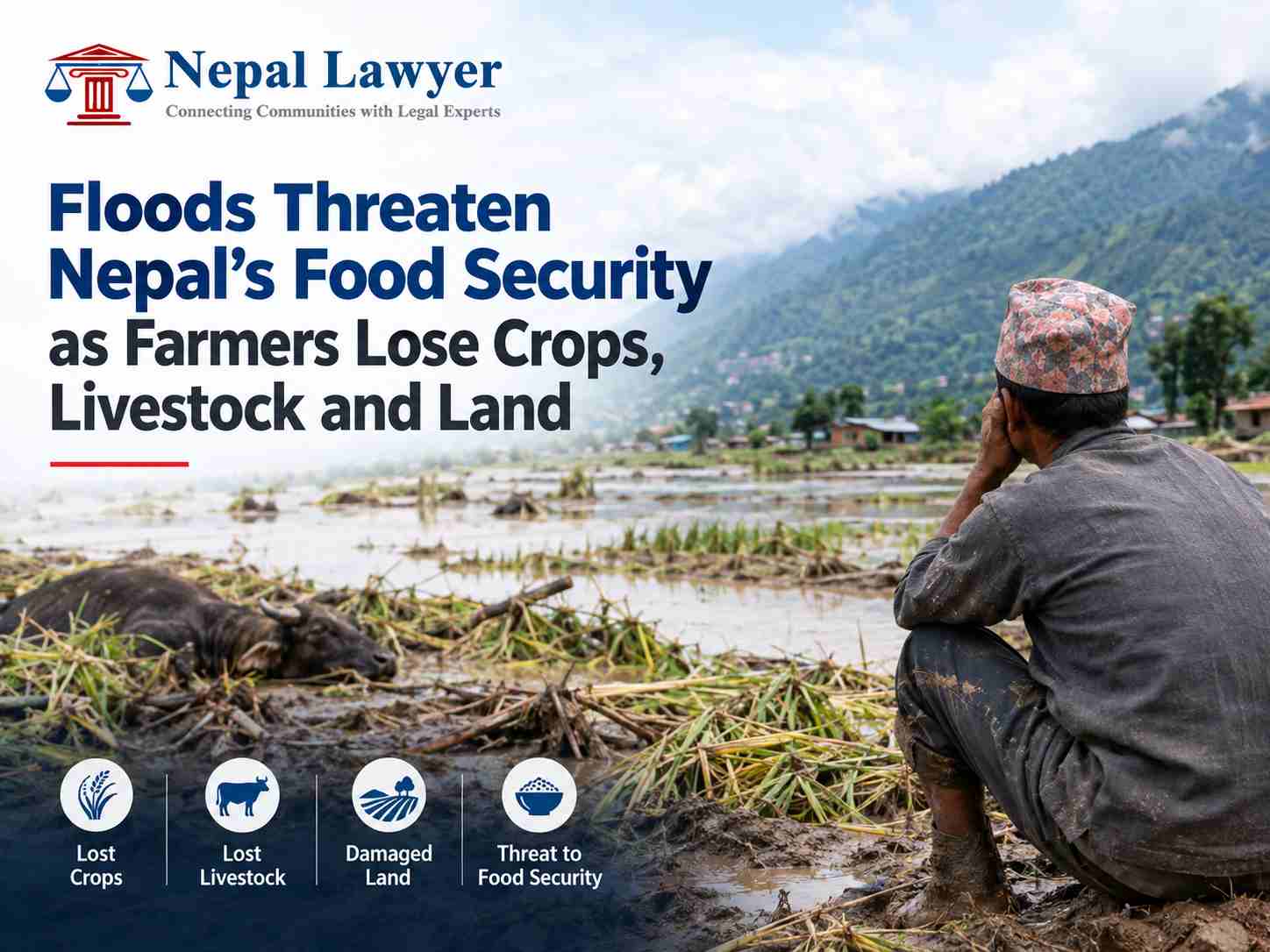
Kathmandu, Bhadra 28 - The devastating floods that struck some parts of Nepal on August 26 have left devastating impact on agricultural communities in the flooding area, where many farmers had been busy with harvesting their crops and livestock.
In the affected regions such as Rasuwa, Nuwakot and Dhading, farmers had been in the field for months preparing and cultivating paddy crops without much notice of the floods. The loss is significant not just for annual income for the smallholder farmers, but also for the well-being of the entire family living in these communities. Families might also lose stored food, livestock that were saved for household use, and seeds for the next planting season, as well as lose their farms in some instances.
Nepal has about 2.7 million smallholder farms that produce about 70 percent of the country's food. This could ultimately impact on the food security and reliance on imported food not just for individual farming families, but for the country of Nepal as a whole, if the losses are significant enough. Now, the effect is being felt in the communities impacted by the floods. In Uttargaya Rural Municipality, over 2,500 livestock were washed away and families are still looking for their relatives who didn't make it. In Kispang Rural Municipality, damaged roads have disrupted access and around 120 people, including children, are staying in temporary shelter.
Temporary relief in the form of food and shelter is critical, but long-term recovery will need more than temporary assistance. Farmers who have lost crops and productive assets may need access to affordable finance, effective crop and livestock insurance, replacement seeds and livestock, secure land rights, appropriate resettlement support and reliable early-warning systems. Stronger cooperatives and better access to markets could also help farming households recover and prepare for future disasters.
The bigger issue is that some farmers may lose the will to go out and farm or move elsewhere. This can affect the resilience of the rural communities, decrease food production and increase Nepal's dependency on food imports. Protecting farmers following a disaster is not just about compensating for losses to the individual farmer, it is linked closely to the long-term food security, the country's rural economy and climate resilience.
Source: The Kathmandu Post