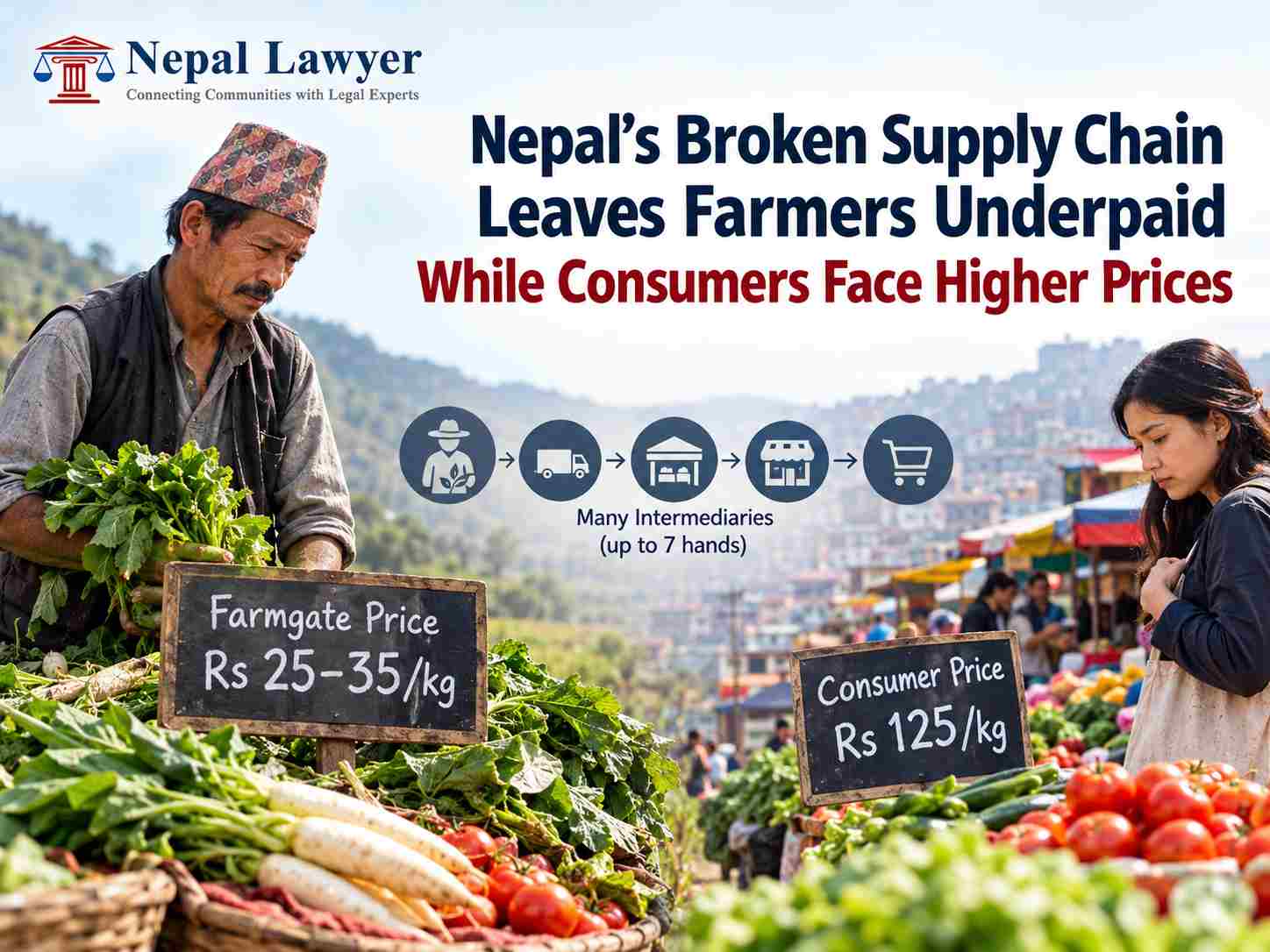
Kathmandu, Ashoj 13 - Nepal's agricultural value chain is broken, leaving the farmers with low income and consumers with high costs. Nepali farmers are receiving comparatively low prices for their agricultural produce while consumers continue paying significantly more, highlighting serious inefficiencies in the country’s agricultural supply chain. This escalating price difference between farmgate and consumer prices has revealed significant flaws in Nepal's agricultural market, including many intermediaries, poor regulation and lack of monitoring.
The final quarter of fiscal year 25/26 saw farmgate prices increase by only 2.04 percent, the smallest increase in eight years, according to the National Statistics Office (NSO). But farmers' gains in prices have yet to be passed down through to consumers at affordable prices. According to a government study, vegetables bought from farmers from Makawanpur and Dhading cost Rs25-35 per kilogram, but reach as high as Rs125 in the Kathmandu Valley, passing through as many as seven hands.
The escalating cost difference has caused losses to farmers many times who have protested for non-receiving fair price for their produce. Occasionally, farmers have dumped vegetables and other crops on the roads and streets, rather than selling them for prices they think are not viable. In the meantime, market prices are high and consumers are not being offered the price they want, nor are farmers. Consumers continue to pay high market prices, and neither group benefits from the current distribution mechanism.
Too many intermediaries, vagueness in the market regulations and lack of government supervision are some of the significant factors contributing to the farm-to-retail price gap. The government had earlier tried to put in place a clearer system for agricultural pricing and distribution, but it failed to actually do so. The ongoing opacity has created great disparities between producers and consumers.
Now a new government committee is looking into the number of intermediaries required in Nepal's agricultural trade to make the supply chain more transparent and efficient. The initiative might help to increase the farmers' income without adding to the food market prices, resolving one of the consistent problems in Nepal's agriculture sector and food market.
Source: The Kathmandu Post