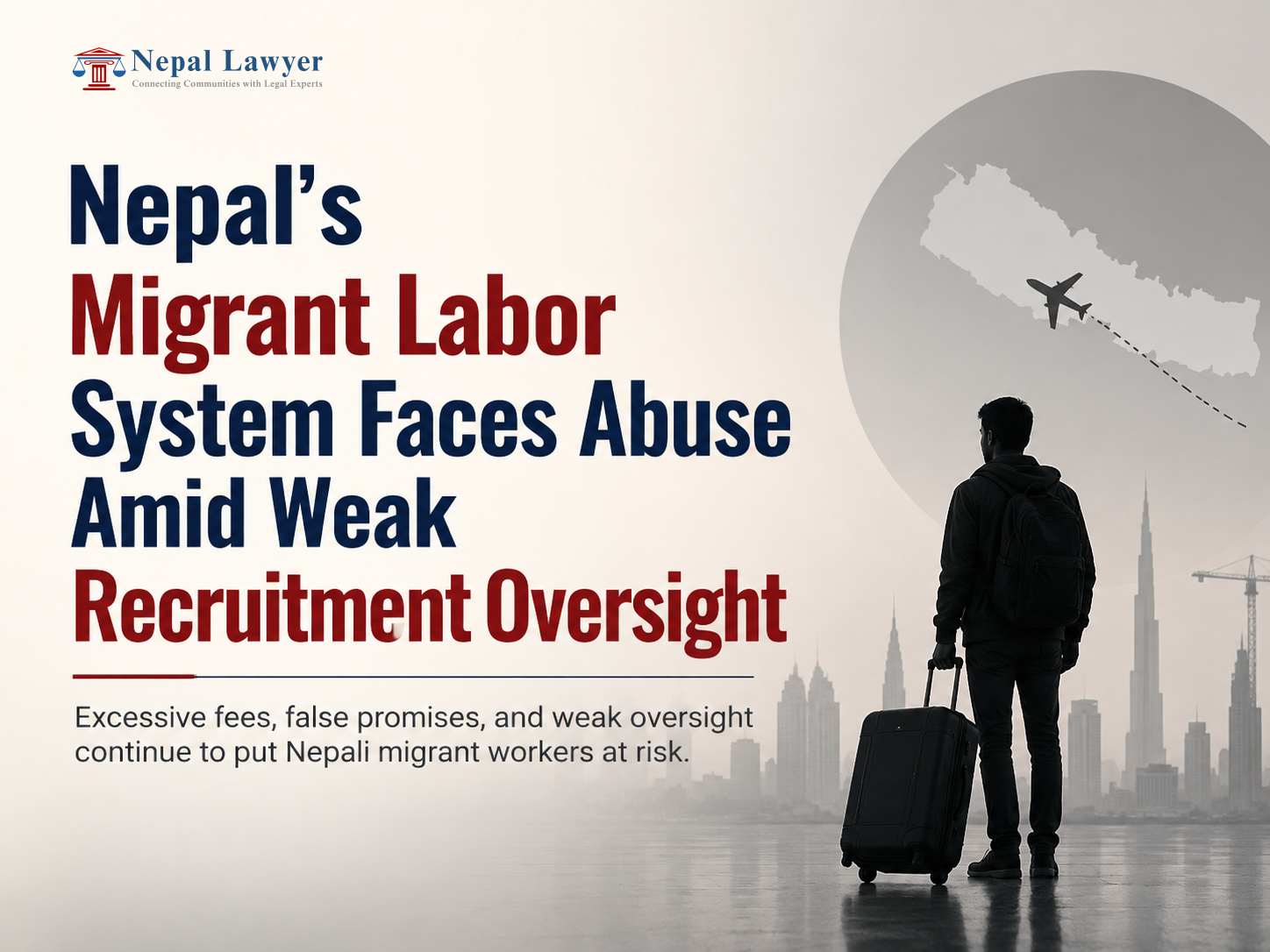
Kathmandu, Bhadra 02 - Nepal's foreign employment industry is still heavily dependent on private manpower agencies that recruit migrant workers abroad, and many workers are still being exploited and abused by the agencies by demanding excessive recruitment fees and committing fraud, as per the report by The Kathmandu Post.
Manpower agencies play a central role in Nepal’s migration system. These agencies are vital for helping workers find foreign employers, handle documents and paperwork, and guide them through the recruitment procedure. Nevertheless, the system has received complaints from employees claiming they were overcharged, given false data regarding an employment opportunity or recruited under conditions other than the ones they had been promised.
The problems point to a bigger issue regarding the implementation of the laws of foreign employment in Nepal. While the government has laid down some rules for recruitment agencies, it is a real challenge to monitor thousands of recruitment transactions and ensure adherence to these rules. Remedies are also hard to obtain once workers have left Nepal. Another concern is the unequal bargaining position between prospective migrant workers and recruiters. Employment abroad is pursued by many Nepalis due to limited employment opportunities and income in the country. This can lead to employees accepting offers on recruitment terms without realizing what they are being offered and without being fully aware of the costs, contractual terms or legal protections that come with it.
There are also a number of government bodies for the regulation of recruitment and protection of migrant workers within the foreign-employment system. The Department of Foreign Employment is the agency that licenses and monitors recruitment agencies, and the Ministry of Labour, Employment and Social Security is responsible for the overall foreign-employment policy. However, in reality, there's some doubt whether current enforcement measures are effective in preventing workers from engaging in misconduct before they depart. Recruitment-related disputes can involve problems such as unauthorized fees, false promises about salaries and working conditions, contract substitution, or a failure to provide the job that was originally agreed upon. In the event of such disagreements, employees might have to resort to administrative or legal action, which can be challenging for those who have already travelled abroad for work.
This also raises question about the accountability of manpower agencies. Recruitment companies are subject to regulation and are required to abide by the foreign-employment laws and conditions of their licenses in Nepal. If agencies fail to meet those requirements, authorities may initiate regulatory or legal action depending on the nature of the offense. Meanwhile, adequate protection for migrant workers is not possible if it relies solely on action after an abuse has occurred. Better monitoring of the recruitment agencies, transparency in the recruitment process, true disclosures of job conditions and increased awareness among job seekers in Nepal may help mitigate the risks faced by Nepalis seeking employment abroad.
The issue is even more critical in Nepal as it has heavily relied on foreign employment. Protection of migrant workers is not just a labor concern but also a consumer protection, regulatory enforcement and access to justice issue with thousands of Nepalis moving out of the country annually for jobs. The ongoing issues with manpower agencies thus call for effective enforcement of the national laws regarding foreign employment and more robust systems to ensure that workers can verify the employment details, report issues and get compensation or other remedies when their rights are violated.
Source: The Kathmandu Post