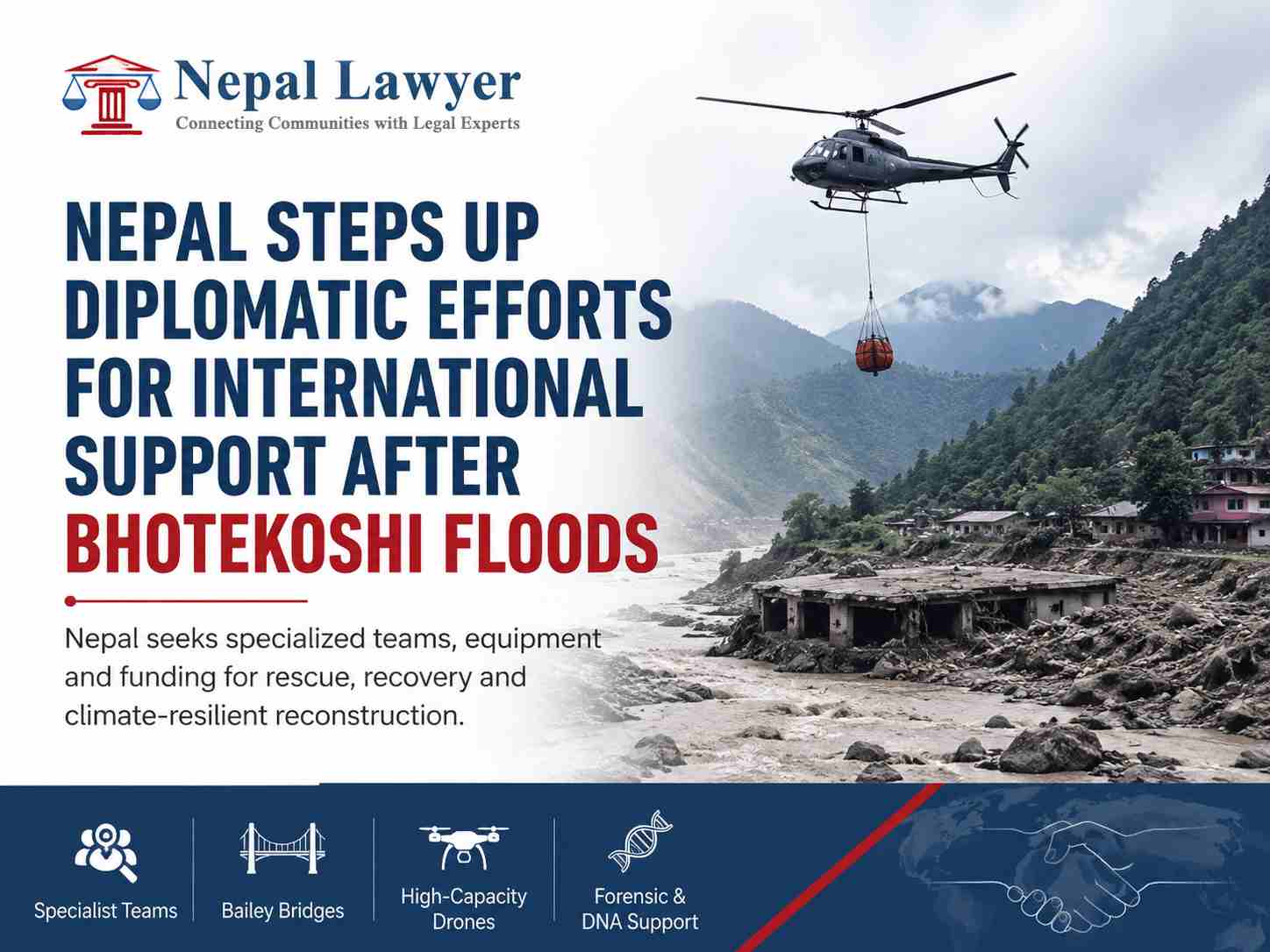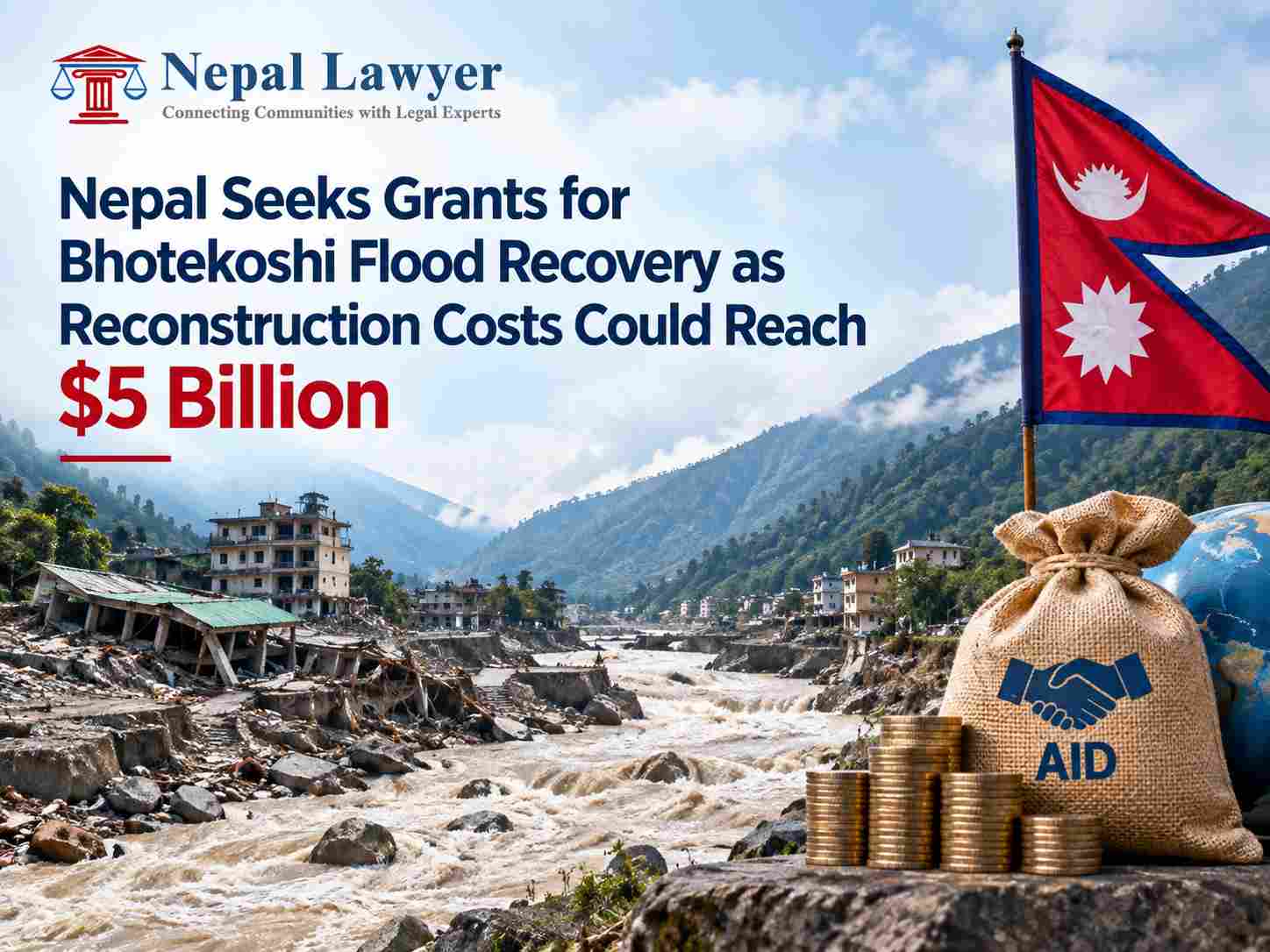
Kathmandu, Bhadra 24 - The Government of Nepal is exploring grants, international aid and concessional financing to fund reconstruction following the devastating August 26 Bhotekoshi floods. Initial estimates of damage to public and private property run into more than Rs400 billion, while the ultimate cost of reconstruction and recovery is estimated to be $4 - $5 billion by the Government. The extent of the tragedy has added to Nepal's demands for international assistance while reducing the burden of further borrowing on public debt.
The National Planning Commission (NPC) has commenced to prepare a Post-Disaster Needs Assessment (PDNA) to estimate the overall physical damage, economic loss and recovery requirements due to Bhotekoshi floods. The assessment will be carried out over a period of five weeks and will be the basis for a planned international donor conference. The final reconstruction effort and recovery costs are anticipated to be at least 30 percent higher than the initial Rapid Damage and Needs Assessment, as additional assessments of infrastructure, livelihoods and economic losses continue.
The government has indicated that it would prefer grants and international assistance over additional borrowing to finance the flood recovery and reconstruction. Nepal's Foreign Minister Shisir Khanal has asked its diplomatic missions to focus on granting and aid for Nepal with foreign governments and international organisations. He has also raised concerns over increasing debt burden of Nepal, which has significantly increased since the country started large-scale reconstruction efforts after the 2015 earthquake.
But officials and experts say that grants might not be enough to reconstruct the massive expense. Former Vice-Chair of the National Planning Commission Govinda Raj Pokharel, whose tenure was related to the assessment and reconstruction process on the aftermath of the earthquake in 2015, has recommended that Nepal may have to take soft or concessional loans in addition to accepting grants. The government is also seeking other sources of funding for long-term recovery and reconstruction from the flood, such as philanthropic organizations and wealthy international donors.
Nepal also plans to seek assistance from the international Loss and Damage Fund, saying climate change exacerbated the disaster. Government officials see the fund as a way to provide financial support and part of Nepal's overall efforts for climate justice and climate financing for disaster. Nepal has always underscored that the countries which are relatively less responsible for global greenhouse gas (GHG) emission but are more vulnerable to climate-related disasters are more vulnerable. Nepal has always pointed out that it is more vulnerable because the countries which contribute relatively less GHG emission are more vulnerable to climate-related disaster.
The Bhotekoshi flood recovery exercise will not be just about reconstruction of damaged houses, roads, hydropower projects, etc. The PDNA is also expected to examine relocation of settlements in high-risk areas, improved river-basin planning, stronger early-warning systems and enhanced disaster preparedness. The potential reconstruction cost for Nepal could exceed a billion dollars and the country is dealing with the dilemma of obtaining enough foreign funding for reconstruction after the floods, and at the same time minimizing disaster risks and avoiding a significant burden on public debt.
Source: The Kathmandu Post