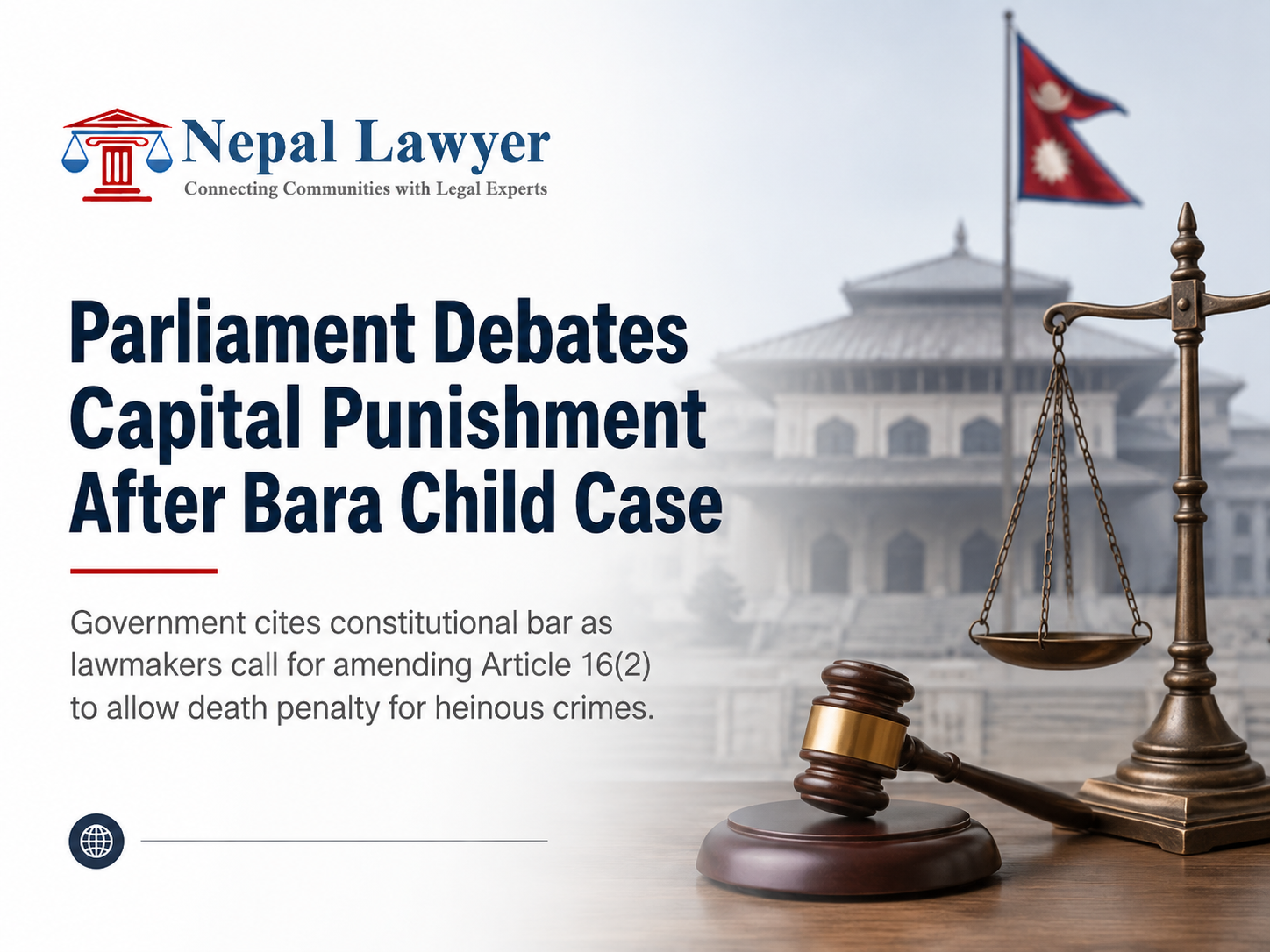
Kathmandu, Bhadra 10 - Nepal’s House of Representatives has raised debate over whether the country should reconsider its constitutional ban on capital punishment following the rape and murder of a three-year-old child in Jeetpur - Simara, Bara. There are some lawmakers have called for an amendment to Article 16(2) of the Constitution to allow death sentences for "particularly heinous" crimes. But Law, Justice and Parliamentary Affairs Minister Sobita Gautam and Home Minister Sudan Gurung said the government cannot put the death penalty in place under the existing constitutional provisions which explicitly bar any law imposing death penalty. Capital punishment was abolished in Nepal in 1990, which is also incorporated in the 2015 Constitution.
Currently, rape and murder are punishable under a strict Nepalese criminal law, which already has one of the toughest penalties in the country. Under Section 41(f) of the National Penal (Code) Act, 2017, a person who commits murder after rape is liable to imprisonment for life. The current debate also has reignited the call for a broader reform of laws related to sexual violence and crime committed against women and children.
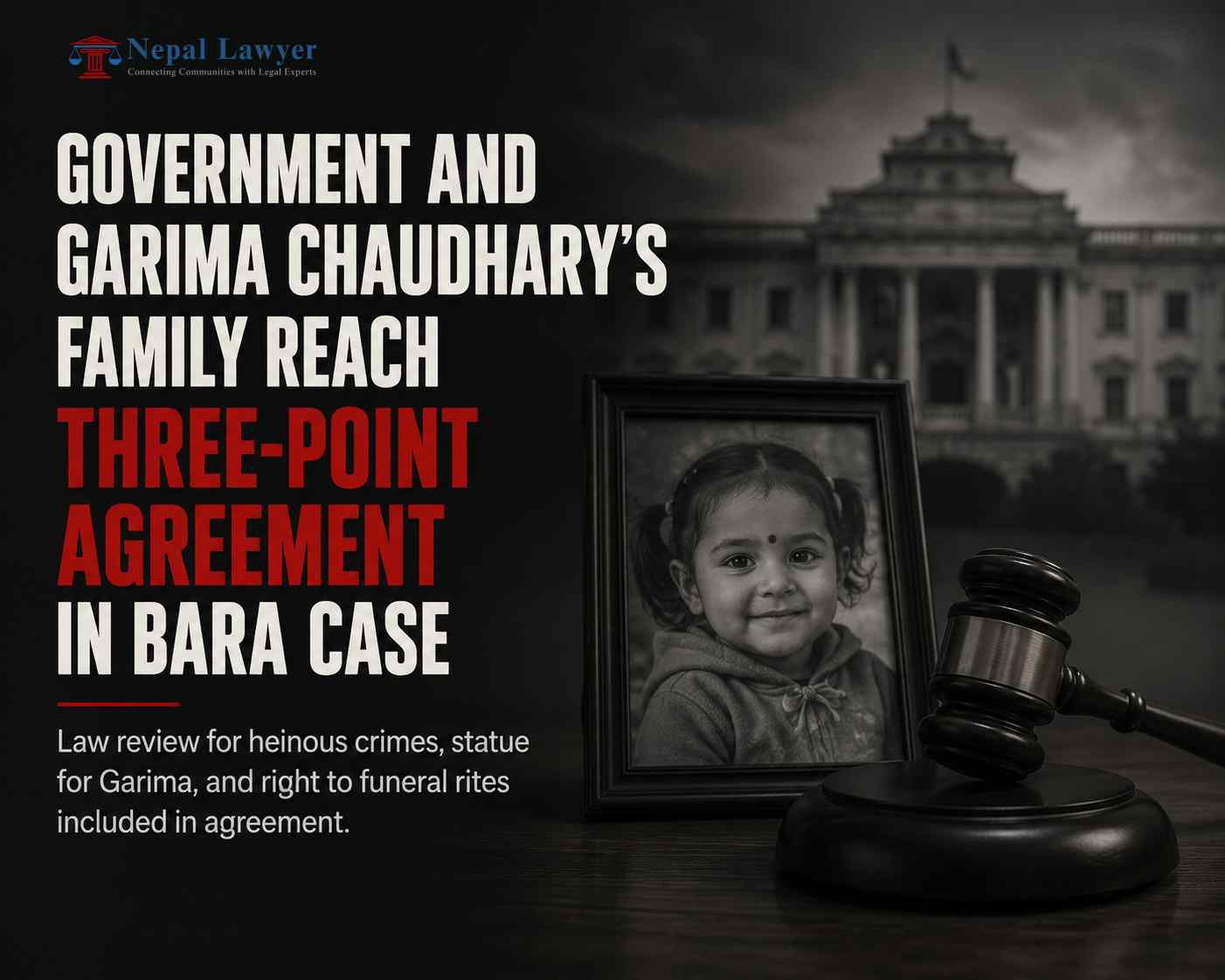
In a deal with the victim's family, the government has set up a seven-member Garima Nyaya Sankalpa Samiti under the Law Ministry to suggest legal reforms, such as speedy hearing procedure, limits on the time within which a rape case can be filed and changes in punishment. But legal experts have warned that a more severe punishment would not be sufficient to rectify the underlying flaws of Nepal's criminal justice system.
The effective administration of justice remains impacted by delays in police investigation, evidence collection and preservation, forensic examination, prosecution and court proceedings. The issue of capital punishment is not only one of sentencing but also one that raises wider questions about how investigations and prosecutions are strengthened, a reflection of the public's demand for accountability, and how Nepal complies with its constitutional and international human-rights commitments.
Source: The Kathmandu Post