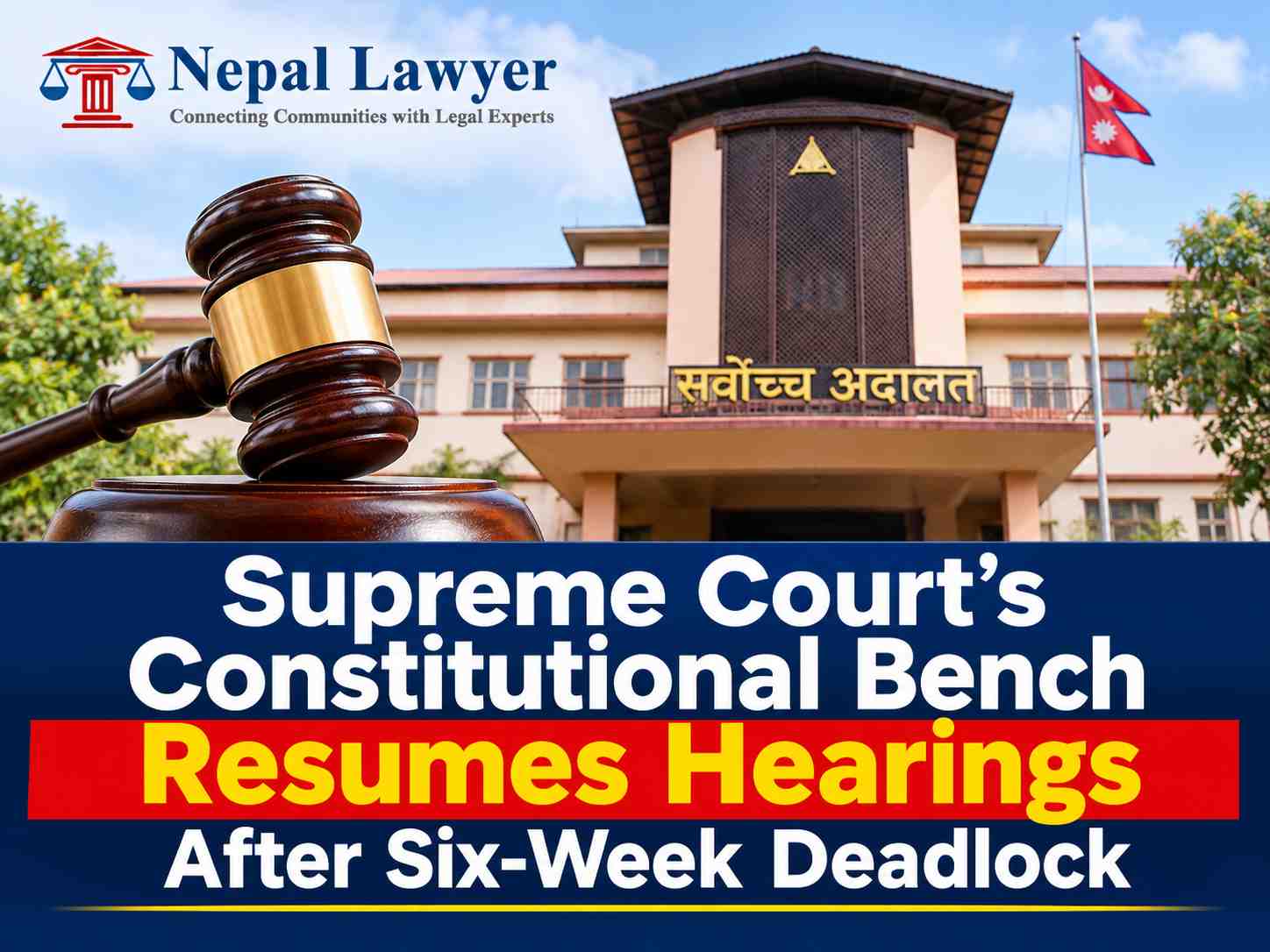
Kathmandu, November 26, 2026 — The Supreme Court’s Constitutional Bench has resumed hearings after nearly six weeks of inactivity, following a decision by Chief Justice Manoj Kumar Sharma to form the bench based on judicial seniority.
The decision has ended a prolonged dispute among Supreme Court justices over the process of selecting members for the Constitutional Bench, which had left hundreds of constitutional cases awaiting hearings.
The five-member bench comprises Chief Justice Manoj Kumar Sharma and the four senior-most justices on the roster: Sapana Pradhan Malla, Kumar Regmi, Nahakul Subedi and Saranga Subedi.
Four Cases Heard on the First Day
The Constitutional Bench resumed proceedings on Wednesday, November 25, with 15 cases listed for hearing. Of those, four cases were heard, while proceedings in another case were postponed after a justice expressed concerns about hearing the matter.
The bench had remained inactive since October 7 amid disagreements over the selection of its members. The dispute centred on whether the Chief Justice should select members at his discretion, whether seniority should determine membership, or whether a lottery system should be adopted.
Chief Justice Sharma's latest decision to follow seniority has provided a way forward, allowing the Constitutional Bench to resume its judicial functions.
246 Cases Awaiting Constitutional Bench Hearings
According to reports, 246 cases are currently pending before the Constitutional Bench, with some disputes remaining unresolved for as long as eight years. Around 30 cases are reportedly awaiting their preliminary hearings.
The pending matters involve a wide range of constitutional and legal issues, including taxation, elections, civil service matters, property rights, local government disputes, education laws, political parties, transitional justice, enforced disappearances, tobacco regulation and same-sex marriage.
The bench is also expected to examine constitutional challenges involving government ordinances and other decisions affecting the functioning of state institutions.
Disputes Over Bench Formation
The prolonged disruption was linked to disagreements among justices regarding the composition of the Constitutional Bench. Some justices favoured selection based on seniority, while others supported extending the lottery system used to assign regular Supreme Court benches.
The controversy raised concerns regarding judicial administration, transparency in bench formation and the potential impact of internal disagreements on the timely delivery of justice.
The Nepal Bar Association had also expressed concerns over the prolonged inactivity and urged the judiciary to resolve the dispute and resume hearings.
Constitutional Role of the Bench
The Constitutional Bench is established under Article 137 of the Constitution of Nepal. It consists of the Chief Justice and four other justices selected from a roster recommended by the Judicial Council.
The bench has jurisdiction over significant constitutional disputes, including questions involving the constitutionality of laws, disputes relating to federal jurisdiction, election-related constitutional matters and cases referred by other Supreme Court benches involving serious questions of constitutional interpretation.
The resumption of hearings is expected to provide an opportunity for addressing long-pending constitutional disputes and restoring progress in cases involving important questions of governance, fundamental rights and constitutional accountability.
The development marks an important step toward restarting the Supreme Court’s constitutional adjudication process after weeks of disruption.
The Kathmandu Post — Constitutional Bench resumes hearings after weeks of deadlock