
Why Nepal's IT Sector Attracts Global Investment
Nepal has emerged as a compelling destination for foreign direct investment in information technology, driven by a unique combination of competitive advantages. The country's IT sector witnessed remarkable transformation, positioning itself as a strategic alternative to traditional outsourcing destinations.
Key Investment Drivers:
A skilled workforce of 50,000+ IT graduates enters the market annually from universities across Kathmandu, Pokhara, and emerging tech centers. English proficiency, technical expertise in AI/ML, cloud services, and competitive salary structures (averaging $400-800/month for developers) create exceptional value.
Operational costs remain 60-70% lower than India and Philippines, with affordable office space in business districts like Thamel, Durbar Marg, and new IT parks in Banepa. The export-oriented policy framework encourages BPO, SaaS development, and software outsourcing to US, UK, Australian markets.
Legal Framework & Regulatory Environment
Primary Governing Laws
Foreign Investment and Technology Transfer Act, 2019 (FITTA) serves as the cornerstone legislation. This act guarantees:
- 100% foreign ownership permitted in IT and software companies
- No maximum investment ceiling
- No minimum investment threshold for ICT sector (as per October 2023 notification)
- Automatic approval route for qualified investments
Supporting legislation includes Companies Act 2006, Industrial Enterprises Act 2020, and Income Tax Act 2002, creating a comprehensive regulatory ecosystem.
Investment Approval Process
The Department of Industry operates a One-Stop Service Centre (OSSC) that streamlines approvals:
|
Step |
Action |
Timeline |
Authority |
|
1 |
Application submission via IMIS portal |
Day 0 |
Department of Industry |
|
2 |
Document verification |
Day 1-2 |
OSSC |
|
3 |
Approval issuance |
Within 7 days |
Department of Industry |
|
4 |
Investment inflow notification |
Within 2 years |
Nepal Rastra Bank |
|
5 |
Industry registration |
Concurrent |
Department of Industry |
Required Documentation:
- Application form with investment action plan
- Time schedule for capital inflow
- Company incorporation documents
- Foreign investor identification
- Source of funds declaration
Geographic Investment Hotspots
Kathmandu Valley: The Primary Tech Hub
Kathmandu hosts 85% of Nepal's IT companies, concentrated in:
- Thamel-Durbar Marg corridor: Premium outsourcing firms, fintech startups
- Patan-Lalitpur: Software development studios, mobile app companies
- Bhaktapur: Emerging hardware-software integration firms, surveillance technology manufacturers
Major tech parks and incubators include Neo Sky System's IT hub, King's College incubator, and Kathmandu University's research centers.
Pokhara: The Rising Alternative
Pokhara has cultivated 30+ IT companies specializing in:
- Tourism technology solutions
- GIS and digital mapping services
- Remote work infrastructure
- Cost advantages: 15-20% lower operational costs than Kathmandu
The city's peaceful environment attracts digital nomads and international tech talent.
Biratnagar & Eastern Region
Biratnagar serves as the gateway to eastern Nepal markets:
- Growing BPO operations targeting Indian markets
- Hardware distribution networks serving 200+ educational institutions
- Lower labor costs with comparable skill levels
Tax Benefits & Financial Incentives
Corporate Tax Structure
|
Business Type |
Standard Rate |
IT Sector Benefits |
|
General companies |
25% |
Potential exemption |
|
Export-oriented IT |
20% |
5-year holiday possible |
|
Startup < 5 years |
Varies |
Additional rebates |
Customs & VAT Benefits:
- Duty-free import of IT equipment and software
- VAT exemption on exported services
- 50% rebate on telecom infrastructure costs
Repatriation Facilities
FITTA guarantees unrestricted repatriation of:
- Profits and dividends
- Investment capital
- Royalty payments (subject to 5-10% cap)
- Technical service fees
Foreign investors may open convertible currency accounts with NRB approval, facilitating seamless capital movement.
Market Size & Growth Statistics
Sector Performance Metrics
Revenue Data (2025):
- Total IT sector valuation: NPR 55.76 billion
- Export earnings: $649.48 million annually
- Growth rate: 8-12% YoY
- 712 registered IT companies
Employment Statistics:
- Direct IT employment: 25,000+ professionals
- Freelance market: 15,000+ active developers
- Average company size: 20-50 employees
Investment Activity Snapshot
SMERGERS platform:
|
Company Type |
Location |
Annual Revenue |
EBITDA Margin |
|
Enterprise Software |
Kathmandu |
NPR 30 lakhs |
Operating at loss (growth phase) |
|
App Development |
Patan |
NPR 1.3 million |
21% |
|
Food Delivery Tech |
Hetauda |
NPR 8.8 million |
10% |
|
Surveillance Systems |
Bhaktapur |
NPR 41 million |
20% |
Step-by-Step Investment Guide
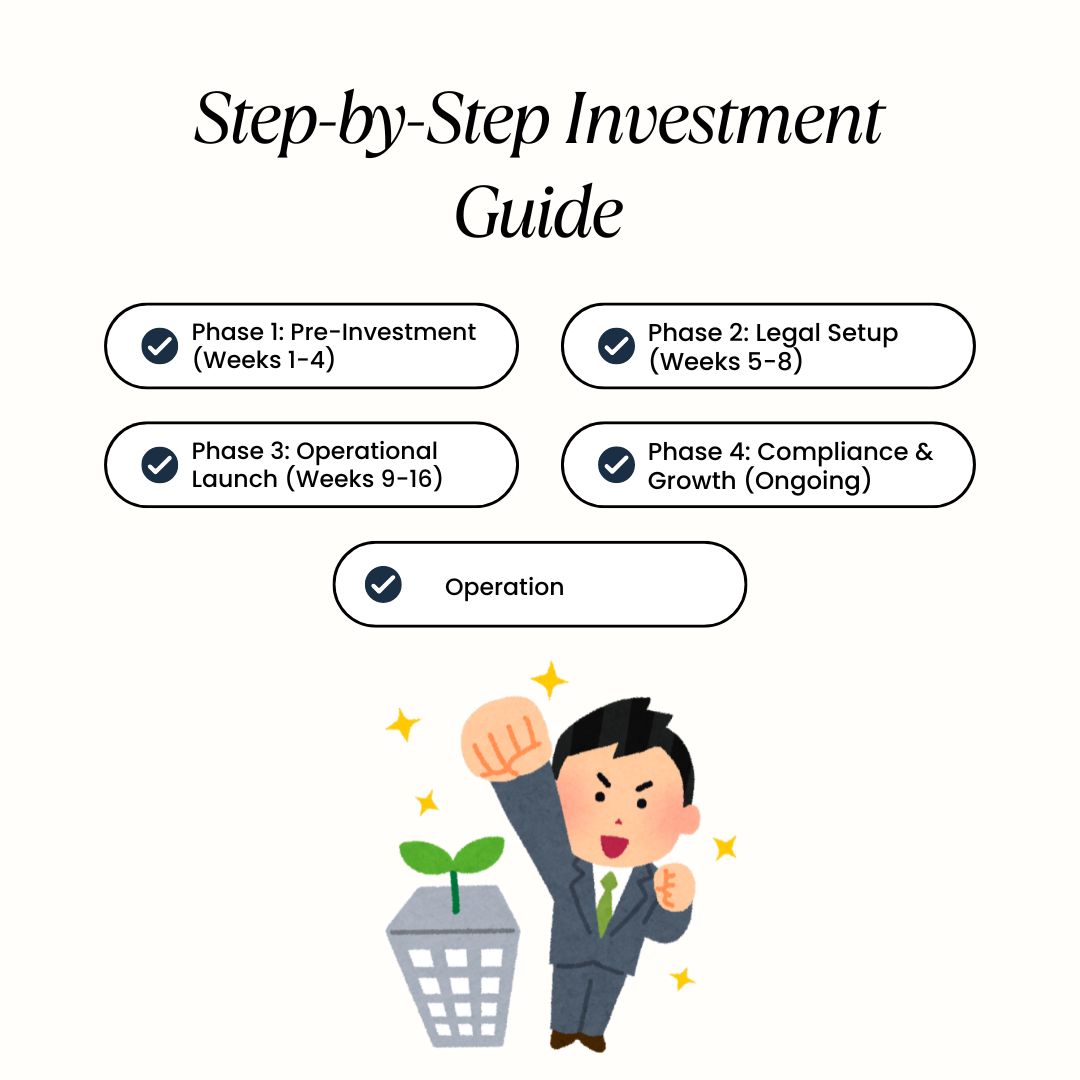
Phase 1: Pre-Investment (Weeks 1-4)
- Market Research: Identify niche opportunities in fintech, ed-tech, health-tech
- Local Partner Identification: Optional but recommended for regulatory navigation
- Business Plan Development: Emphasize export potential and job creation
- Initial Capital Structuring: Minimum NPR 20 million for non-ICT, no minimum for IT
Phase 2: Legal Setup (Weeks 5-8)
- Company Registration: Through Office of Company Registrar
- FDI Application: Submit via IMIS portal with OSSC
- Document Authentication: Notarize foreign documents at Nepali embassies
- Bank Account Setup: Designated bank for capital inflow
Phase 3: Operational Launch (Weeks 9-16)
- Office Setup: Lease agreements in approved tech zones
- Team Recruitment: Tap into Kathmandu University, Tribhuvan University talent pools
- Software Development: Begin MVP development
- Client Acquisition: Target Australian, US markets for BPO services
Phase 4: Compliance & Growth (Ongoing)
- Tax Registration: PAN and VAT enrollment
- Annual Reporting: Submit audited financials to NRB
- Visa Renewals: Business visa extensions for foreign staff
- Profit Repatriation: Quarterly applications to NRB
Visa & Immigration Facilities
Investor Visa Categories
Business Visa: Granted to investors and authorized representatives
- Valid until investment maintained
- Spouse and dependent children included
- No renewal hassles
Residential Visa: For investments exceeding $1 million
- Long-term residency rights
- Multiple entry privileges
- Path to permanent residency consideration
Work Permits: For foreign technical experts
- 15-day processing guarantee
- Transferable between companies
- Social security coverage included
Success Stories & Market Validation
Notable Achievements
Enterprise Software Success: Kathmandu-based ERP provider achieved NPR 30 lakh turnover within 6 months of launch, serving 50+ hospitality clients.
International Recognition: Nepali startup reached ICT Award 2024 finalists, demonstrating global competitiveness.
Export Growth: Surveillance technology firm generated CNY 4.1 million annual revenue through distributor networks across Nepal and India.
Challenges & Risk Mitigation
Common Obstacles
Infrastructure Gaps: Intermittent power supply outside Kathmandu; mitigate through UPS systems and generator backup.
Payment Gateway Limitations: Limited international payment solutions; use Stripe Atlas or partner with Indian payment processors.
Bureaucratic Delays: Despite 7-day approval promise, actual processing may extend to 14-21 days; engage local legal counsel.
Risk Management Strategies
- Power of Attorney: Appoint trusted local representative
- Escrow Arrangements: Structure payment terms with milestones
- Technology Transfer Agreements: Protect IP while complying with FITTA royalty caps
- Dual Legal Structure: Consider Singapore holding company structure
Future Outlook & Digital Nepal Framework
Government Vision
Digital Nepal Framework targets transformation across:
- Education: E-learning platforms for 7 million students
- Healthcare: Telemedicine reaching rural areas
- Agriculture: Smart farming technologies
- Tourism: Digital experience platforms
Infrastructure Investments:
- 4G coverage expansion to 95% of population
- Fiber optic backbone development
- IT park construction in Banepa, Butwal, Dhangadhi
Frequently Asked Questions (Voice Search Optimized)
What is the minimum investment required for IT sector FDI in Nepal?
No minimum investment threshold exists for ICT sector since October 2023, making Nepal highly accessible for small and large investors alike.
How long does FDI approval take in Nepal?
The Department of Industry grants approval within 7 days of receiving complete applications through the IMIS portal, though practical timelines average 2-3 weeks.
Can foreign investors own 100% of IT companies in Nepal?
Yes, FITTA 2019 permits full foreign ownership in IT and software development companies without local partner requirements.
What are the best cities for IT investment in Nepal?
Kathmandu offers the largest talent pool and infrastructure; Pokhara provides lower costs and tourism tech opportunities; Biratnagar serves eastern regional markets.
Are profits from Nepali IT companies repatriable?
FITTA guarantees unrestricted repatriation of profits, dividends, and capital through formal banking channels with Nepal Rastra Bank approval.
What tax benefits do IT companies receive in Nepal?
Export-oriented IT services qualify for 20% corporate tax rate, potential 5-year tax holidays, customs duty exemptions on equipment, and VAT rebates.
How many IT graduates does Nepal produce annually?
Approximately 50,000 IT professionals graduate each year from universities in Kathmandu, Pokhara, and other emerging tech centers.
Is Nepal's internet infrastructure reliable for IT operations?
Kathmandu and major cities offer reliable fiber connectivity; 4G coverage reaches 85% of population, with government targeting 95% coverage by 2026.
Investment Checklist
Pre-investment verification should include:
- Market size validation for target niche
- Local talent availability assessment
- Infrastructure site visits
- Legal counsel engagement
- Banking partner identification
- Visa requirement review
- Technology transfer agreement preparation
- Exit strategy formulation
Conclusion
Nepal's IT sector presents a compelling investment proposition combining liberal foreign investment policies, zero minimum capital requirements, and a young, skilled workforce. The 7-day approval process through One-Stop Service Centre, coupled with repatriation guarantees and tax incentives, creates an investor-friendly environment unmatched in South Asia.
Kathmandu's established ecosystem, Pokhara's emerging talent pool, and Biratnagar's regional access offer strategic location choices. With the Digital Nepal Framework committing to infrastructure development and sector-specific growth, early movers gain first-mover advantages in this $650+ million export market.
For investors seeking high-growth opportunities in uncongested markets, Nepal's technology sector delivers both financial returns and strategic positioning in the evolving South Asian digital economy.
Author: Nepal Investment Advisory
Sources: Department of Industry Nepal, FITTA 2019, Nepal Rastra Bank, SMERGERS Market Data