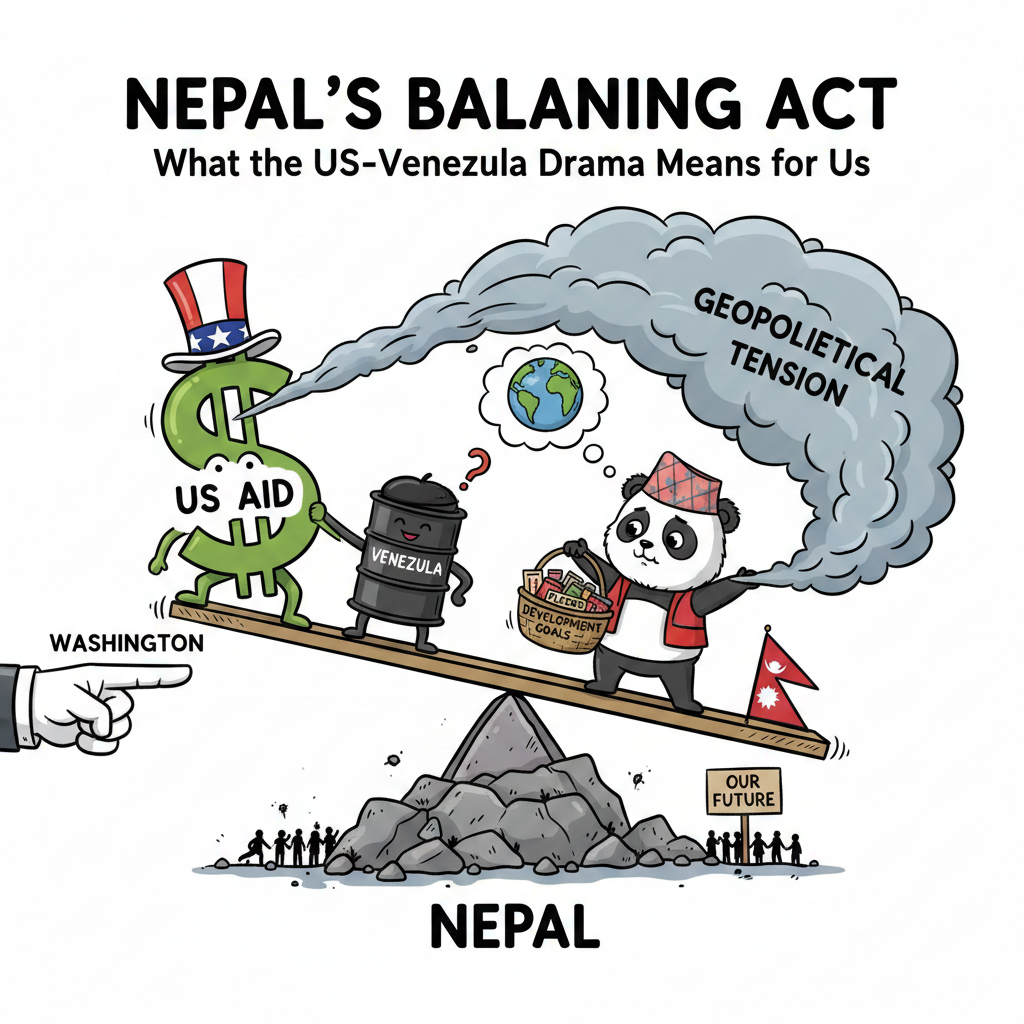
Let's talk about something happening far away that actually hits close to home for Nepal. In early January 2026, American forces grabbed Venezuelan President Nicolás Maduro and flew him to the US. Now Washington is taking control of Venezuela's oil. You might think, "So what? That's South America, not our problem." But here's the thing—it very much is our problem.
Why Should Nepal Care?
When a powerful country like the US can just march into another nation and take its leader, that changes the rules for everyone. Nepal is a small country stuck between two giants, India and China. We've always survived by staying neutral and playing by international rules. But what happens when those rules start disappearing?
Remember the Indian blockades we faced—1969, 1989, and that brutal one in 2015 when we couldn't even get fuel? Those happened because a bigger neighbor didn't like our decisions. The Venezuela situation shows that even more powerful countries are now willing to use force to get what they want. If it can happen to Venezuela, the thought is always there: could it happen to us?
Our "Stay Out of It" Foreign Policy Is Getting Harder
Nepal's official response was pretty measured. Our Foreign Ministry said everyone should "exercise restraint" and solve problems through "dialogue and diplomacy." Pretty standard stuff for us—we've been saying this since we helped start the Non-Aligned Movement back in 1961.
But here's the honest truth: it's getting really hard to stay neutral these days. We're getting pulled in every direction:
-
Western countries offer us aid and projects, but often with strings attached
-
Our politicians sometimes seem more loyal to foreign donors than to Nepali interests
-
We're trying to balance between India and China, but that's like walking a tightrope
-
And now we see the US grabbing another country's oil resources
As one Nepali expert put it, we're actually lucky to have two big neighbors instead of one—at least they keep each other in check. But our current leaders seem to be annoying both of them at the same time, which isn't smart.
The Money Problem
We don't trade much directly with Venezuela, but this oil grab could still hurt our wallet. Global oil prices affect what we pay for fuel imports. More importantly, if big countries start using economic pressure more often, we become more vulnerable.
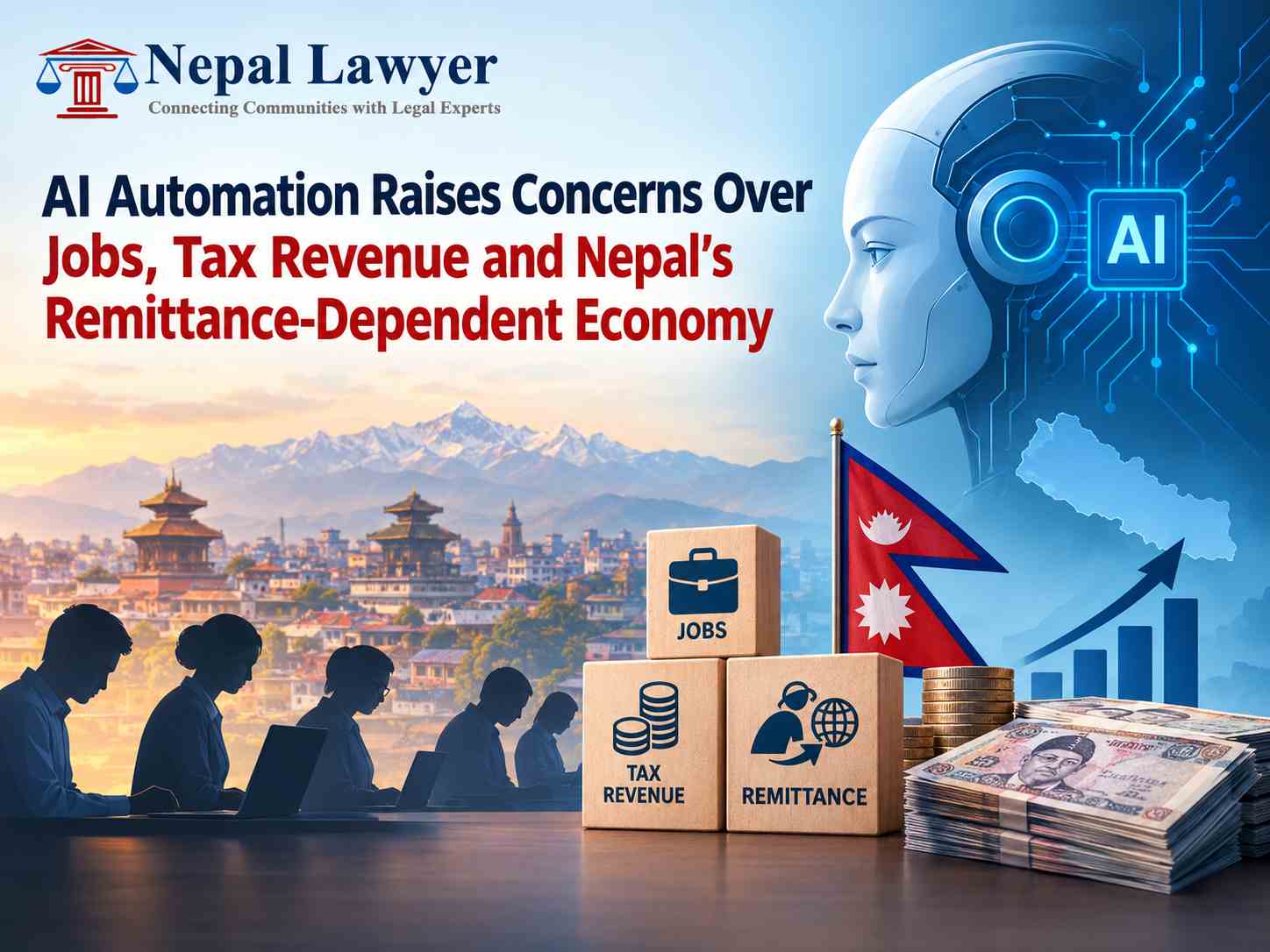
We've been down this road before. During the 2015 blockade, we had to turn to China for emergency fuel supplies. It worked, but it also showed how dependent we are. Our economy runs on money sent home by Nepalis working abroad—remittances gave us a surplus of 6.7% of GDP last year. But we need to build our own strength, not just rely on others.
Water: Our Own "Oil" Problem
Here's something interesting: Venezuela's mistake was depending too much on just one thing—oil. When that became a target, they were in trouble. Nepal has its own version of this problem: water.
Everyone wants our hydroelectric power, especially India. But if we only focus on selling electricity and ignore irrigation, flood control, and other water needs, we could end up just like Venezuela—rich in a resource but poor in power. As one of our former water ministers warned, we might end up paying all the environmental costs while our neighbor gets the benefits for free.
What Can We Actually Do?
We can't exactly tell the US to stop, can we? But we do have options:
-
Stick Together With Other Small Countries: We need to work more closely with other nations in the Non-Aligned Movement and the UN. When small countries unite, we have a bigger voice. We've been saying this for years, but now it's more important than ever.
-
Build More Options: We can't depend on just one country for trade or supplies. The China option helped us in 2015, but we need even more connections. We should also develop our own resources better—not just hydro, but everything we can use.
-
Clean Up Our Own House: Foreign influence is a problem because our own institutions are weak. When our politicians take money from foreign donors and our courts get politicized, outsiders find it easy to push us around. We need to fix this ourselves.
-
Smart Balancing: It's not about cutting off one country for another. It's about dealing with everyone on our own terms. We can do business with the US, India, China, and others without becoming anyone's puppet. But that requires smart leadership that thinks about Nepal first.
What Our Neighbors Are Thinking
India is being careful about Venezuela—they used to buy their oil but stopped after US pressure. They know what it's like to be squeezed by a bigger power. China is watching closely too. They invested billions in Venezuela and now might lose that, but they also see how the US operates and might use similar tactics in their own backyard. That could affect us.
The Bottom Line
The US taking over Venezuela's oil isn't just about faraway politics. It's a warning sign for small countries like ours. The old rules about respecting each other's sovereignty? Those are being rewritten by the powerful.
Nepal has survived for centuries by being smart and independent. We've avoided taking sides between bigger powers. But today, that's not enough. We need to be stronger economically, cleaner politically, and smarter diplomatically.
As one expert said, it's not just about balancing anymore—it's about benefiting from these relationships while protecting ourselves. That's getting harder as international law becomes optional for powerful countries.
The Venezuela crisis reminds us of something we learned the hard way: in this world, might often makes right. For Nepal to survive and thrive, we need to stop being naive. We can't control what superpowers do, but we can control how prepared we are.
We need leaders who put Nepal first, institutions that can't be bought, and a foreign policy that's flexible but never forgets who we are. The world is getting more dangerous for small countries. It's time we woke up to that reality.
In simple terms: Big countries are playing rough, taking what they want. Nepal needs to wise up, stand together with other small nations, and build our own strength so we don't become the next Venezuela.