Could Nepal's Monarchy Make a Comeback? Examining the Possibility of Royal Restoration
As political instability persists in Nepal's young republic, debates over the abolished monarchy have resurfaced—but constitutional and popular obstacles make restoration highly unlikely
KATHMANDU — Seventeen years after Nepal voted to abolish its 240-year-old monarchy and establish itself as a federal democratic republic, questions about the royal institution's potential return continue to simmer beneath the surface of the nation's political discourse. While pro-monarchy movements have gained renewed visibility in recent years, constitutional experts and political analysts largely agree that a restoration faces formidable legal, political, and popular barriers.
The End of an Era
Nepal's journey from kingdom to republic was neither swift nor peaceful. A decade-long Maoist insurgency that claimed more than 17,000 lives fundamentally transformed the country's political landscape. The conflict, which began in 1996, targeted the monarchy as a symbol of feudal oppression and inequality. The royal institution's legitimacy suffered a devastating blow in 2001 with the palace massacre that killed King Birendra and most of the royal family, bringing the unpopular King Gyanendra to the throne.
Gyanendra's subsequent dissolution of parliament in 2005 and assumption of direct rule catalyzed a mass pro-democracy movement. The 2006 People's Movement (Jana Andolan II) united political parties and civil society against royal authoritarianism. The interim parliament elected in 2007 voted overwhelmingly to abolish the monarchy, and Nepal's Constituent Assembly formally declared the country a federal democratic republic on May 28, 2008.
Voices for Restoration
Despite this history, pro-monarchy sentiment has not disappeared entirely. The Rastriya Prajatantra Party (RPP), Nepal's main royalist political faction, has consistently advocated for a constitutional Hindu monarchy, arguing that the institution provided stability and national unity that the republic has struggled to deliver.
"Nepal has experienced chronic political instability since becoming a republic," argues Rajendra Lingden, chairman of the RPP. "We've had numerous prime ministers, constitutional crises, and a failure to deliver on the promises of federalism. A constitutional monarchy, as exists in Britain or Japan, could provide continuity while maintaining democratic governance."
Pro-monarchy rallies in Kathmandu and other cities have occasionally drawn thousands of participants, with demonstrators expressing nostalgia for what they characterize as a more stable past. Some supporters point to Nepal's incomplete constitution-writing process, frequent changes in government, and perceived corruption as evidence that the republican experiment has failed to meet expectations.
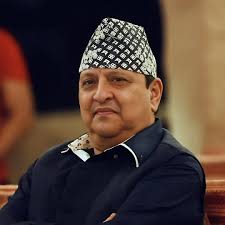
The deposed King Gyanendra, now 77, has maintained a relatively low profile but has made occasional public appearances that draw crowds of supporters, suggesting some residual affection for the royal family among segments of the population.
The Republican Consensus
However, these pro-monarchy voices represent a distinct minority in Nepal's current political landscape. The major political parties that dominate parliament—including the Nepali Congress, the Communist Party of Nepal (Unified Marxist-Leninist), and the Communist Party of Nepal (Maoist Centre)—remain firmly committed to the republican system.
"The monarchy question was settled definitively in 2008 through a democratic process," says Gagan Thapa, a prominent leader in the Nepali Congress. "The Constituent Assembly's decision reflected the will of the Nepali people. Reopening this debate undermines the sacrifices made during our democratic movement and the civil conflict."
Political analysts note that the parties that led the movement against the monarchy now dominate Nepal's political institutions. These groups view the republican system as non-negotiable, representing hard-won gains from years of struggle. The Maoist party, which fought specifically to abolish the monarchy, remains a significant political force and would fiercely oppose any restoration attempt.
Civil society organizations and human rights activists generally align with this position, viewing the monarchy as incompatible with modern democratic values and social equality.
Constitutional and Legal Obstacles
Beyond political opposition, any attempt to restore the monarchy would face substantial constitutional barriers. Nepal's Constitution of 2015 explicitly defines the country as a "federal democratic republican nation." Article 4 declares Nepal to be an "independent, indivisible, sovereign, secular, inclusive, democratic, socialism-oriented, federal democratic republican state."
Constitutional law expert Dr. Bipin Adhikari explains the challenge: "To restore the monarchy would require amending the most fundamental provisions of the constitution—essentially rewriting the document's basic structure. This would require a two-thirds majority in parliament, which is currently unimaginable given the composition of political forces."
Moreover, such a change would likely require approval through a national referendum, given its fundamental nature. Public opinion surveys, while varying in methodology, generally show support for monarchy restoration ranging from 10 to 35 percent—far short of the majority needed for such a dramatic reversal.
The RPP's performance in elections provides another indicator of pro-monarchy sentiment. In the 2022 parliamentary elections, the party secured only seven seats in the 275-member House of Representatives, representing approximately 2.5 percent of the vote. While the party argues that many voters support a constitutional monarchy without necessarily voting for the RPP, these results suggest limited electoral appetite for restoration.
A Middle Ground?
Some political observers have suggested potential compromise positions, though none have gained significant traction. These include proposals for a purely ceremonial royal role without constitutional status, similar to how some European countries maintain non-reigning royal families, or recognition of the former royal family's cultural and religious significance without political authority.
However, such arrangements would require agreement from both pro-monarchy forces and republican parties—a consensus that appears elusive. The emotional and ideological divide over the monarchy remains deep, shaped by decades of conflict and fundamentally different visions for Nepal's national identity.
Regional and International Context
Nepal's political trajectory has also been influenced by broader regional trends. The survival of monarchies in Bhutan and Thailand, both of which have transitioned to constitutional frameworks while retaining royal institutions, is sometimes cited by restoration advocates as evidence that monarchy and democracy can coexist.
However, Nepal's specific historical experience—particularly the violent civil conflict and the last king's authoritarian actions—distinguishes it from these neighbors. International observers and Nepal's diplomatic partners have generally accepted the republican system as legitimate and show no indication of supporting a restoration.
Assessing the Likelihood
The evidence suggests that despite periodic agitation and ongoing debate, Nepal's return to monarchy remains highly improbable in the foreseeable future. The combination of constitutional barriers, limited popular support, and overwhelming political opposition creates a nearly insurmountable obstacle to restoration.
"The monarchy question resurfaces periodically, often during times of political dissatisfaction or instability," notes political analyst Dr. Krishna Khanal. "But this reflects frustration with governance rather than genuine support for royal rule. Nepalis may critique their politicians, but they haven't shown any desire to abandon democracy itself."
The more realistic political dynamics involve debates over federalism's implementation, the balance between executive and legislative power, and the effectiveness of democratic institutions—not a fundamental reversal of the republican system.
While the deposed royal family retains some symbolic significance and nostalgia for segments of society, particularly older generations and certain Hindu communities, this sentiment has not translated into a viable political movement capable of challenging the republican consensus.
Nepal's experiment with democracy faces genuine challenges: political fragmentation, governance deficits, and incomplete implementation of federal structures. However, the solution that appears to command overwhelming support among political elites and the broader public involves strengthening and reforming democratic institutions rather than abandoning them for a return to monarchy.
As Nepal continues navigating its identity as a young republic, the monarchy remains a chapter in the nation's history rather than a plausible element of its political future.