The Legal Framework for Inter-caste & Inter-religious Marriage Registration in Nepal
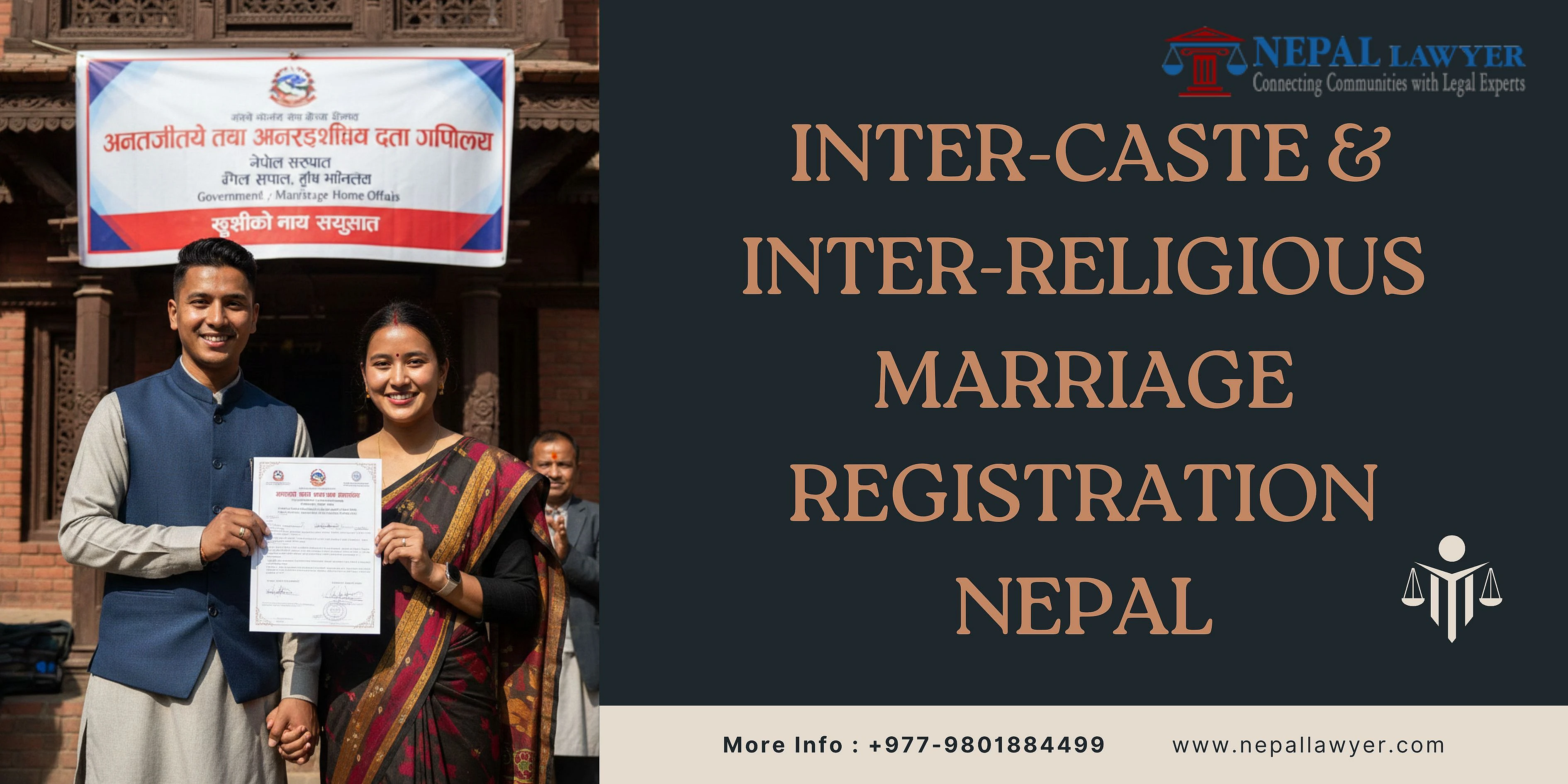
In Nepal, the legal landscape regarding marriage has been transformed. The Inter-caste & Inter-religious Marriage registration in Nepal is now fully protected by statutory law. Traditionally, social barriers were faced by couples. However, these barriers have been dismantled by the new Civil Code. The right to marry is established as a fundamental right. Legal provisions for interfaith marriage are strictly enforced by the district courts and ward offices.
The Civil Code 2074 (2017) is the governing law. Under this code, any marriage is considered valid if it is concluded between a man and a woman. No restrictions are imposed based on caste or religion. Inter-caste marriage laws in Nepal are specifically designed to promote social harmony. Furthermore, the Caste-Based Discrimination and Untouchability (Offense and Punishment) Act, 2068 provides protection. Discrimination against such marriages is punishable by law. Therefore, the process of Inter-caste & Inter-religious Marriage registration in Nepal is not only legal but encouraged.
Step-by-Step Process for Marriage Registration
The process for registration is systematic. It must be followed precisely for the marriage to be legally recognized. Two primary methods are utilized: Court Marriage and Traditional Marriage Registration.
Method 1: Court Marriage Registration
When a marriage is performed without traditional rituals, court marriage is chosen. This is often preferred by inter-religious couples in Nepal.
- Application Submission: An application must be submitted to the District Court.
- Verification: The documents are verified by the court authorities.
- Declaration: A declaration is signed by both parties.
- Certificate Issuance: The marriage certificate is issued by the judge.
Method 2: Registration of Traditional Marriage
If a traditional ceremony is performed, it must be registered within 30 days. This process is handled by the Ward Administration Office.
- Application Form: A designated form is filled out.
- Witness Attestation: Witnesses are required to sign the document.
- Public Notice: A notice is sometimes published for transparency.
- Final Registration: The entry is made in the marriage register.
Table: Comparison of Registration Methods
|
Feature |
Court Marriage (District Court) |
Traditional Marriage Registration (Ward Office) |
|
Appropriate For |
Couples who eloped or want a simple legal process |
Couples who performed religious/social rituals |
|
Time Frame |
Usually completed on the same day |
Must be registered within 30 days of the ceremony |
|
Primary Authority |
Judge |
Ward Chairperson or Administrative Officer |
|
Cost |
NPR 1,500 - NPR 2,500 |
NPR 500 - NPR 1,000 |
|
Requirement of Rituals |
Not required |
Proof of ritual performance is needed |
Documents Required for Registration
Specific documents must be presented. Failure to provide these will result in delays. For Inter-caste & Inter-religious Marriage registration in Nepal, the document checklist is strictly followed.
- Citizenship Certificates: Copies of citizenship certificates of both the bride and groom are mandatory.
- Photographs: Recent passport-sized photos are required.
- Witness Details: Details and citizenship copies of the witnesses are needed.
- Divorce Decree (If applicable): If either party was previously married, a divorce decree must be produced.
- Consent Letter: If the individuals are under the legal age of marriage (which is 20 years in Nepal), parental consent is required. However, for Inter-caste & Inter-religious Marriage registration in Nepal, the legal age is strictly enforced.
Table: Document Checklist for Registration
|
Document Type |
Bride |
Groom |
Witnesses |
|
Citizenship Copy |
Required |
Required |
Required |
|
Passport Size Photo |
3 Copies |
3 Copies |
Not Required |
|
Relationship Proof |
Optional |
Optional |
Mandatory |
|
Legal Age Proof |
Citizenship is sufficient |
Citizenship is sufficient |
N/A |
Legal Challenges and Social Obstacles
Despite clear laws, challenges are often encountered. Inter-caste & Inter-religious Marriage registration in Nepal is sometimes met with social resistance.
Family Opposition
Family opposition is the most common hurdle. However, the law is on the side of the couple. The Civil Code 2074 guarantees the freedom to marry. If force is applied, legal action can be taken. Cases of domestic violence or dowry demands are addressed strictly. The Legal Aid Commission provides free legal support to those in need. Consequently, the legal process for inter-caste marriage includes protection mechanisms.
Social Stigma
Social stigma is still prevalent in rural areas. To counter this, awareness programs are conducted by the government. Inter-religious marriage legal rights are taught in community legal literacy classes. The objective is to normalize these unions. When Inter-caste & Inter-religious Marriage registration in Nepal is completed, the couple is granted full legal protection.
The Role of the Ward Office and District Court
The administration of marriage is decentralized. The Ward Office is the primary contact point for most. However, the District Court holds jurisdiction over specific cases.
Ward Administration Office
For traditional marriages, the Ward Office is the authority. The application is reviewed by the Ward Chairperson. The marriage entry is recorded in the register. This register is maintained as a permanent public record. For Inter-caste & Inter-religious Marriage registration in Nepal, the Ward Office is often the most accessible location.
District Court
The District Court handles disputes and court marriages. If a marriage is opposed by a third party, the court intervenes. The validity of the marriage is determined by the judge. Court marriage procedures in Nepal are designed to be swift. Evidence is examined, and a decision is rendered quickly. This ensures that the rights of the couple are not violated.
Penalties for Discrimination
Strict penalties are outlined for those who interfere. The Caste-Based Discrimination and Untouchability (Offense and Punishment) Act, 2068 is the relevant law.
- Fine: A fine of up to NPR 30,000 can be imposed.
- Imprisonment: Imprisonment for up to three years can be sentenced.
- Compensation: Compensation must be paid to the victim.
These laws apply directly to Inter-caste & Inter-religious Marriage registration in Nepal. If a marriage is opposed solely on the grounds of caste or religion, the opposing party is liable to be prosecuted. Legal provisions for interfaith marriage are robust and strictly enforced.
Conversion and Marriage
Sometimes, religious conversion is discussed before marriage. It is important to note that conversion is not a legal requirement for marriage. Inter-religious marriage legal validity does not depend on conversion. A Hindu may marry a Muslim, a Buddhist may marry a Christian, without conversion. The Civil Code permits this explicitly. However, if conversion is desired by either party, separate procedures must be followed. But for the purpose of Inter-caste & Inter-religious Marriage registration in Nepal, the religion of the parties is noted but not restricted.
Frequently Asked Questions (FAQs)
To further assist with Inter-caste & Inter-religious Marriage registration in Nepal, common queries are addressed below. These questions are derived from Google Trends and "People Also Ask" data.
Is Inter-caste Marriage Legal in Nepal?
Yes, inter-caste marriage laws in Nepal are fully supportive. The Civil Code 2074 explicitly allows marriage between any castes. No permission is needed from any caste organization.
What Documents are Needed for Inter-religious Marriage?
The documents are standard. Citizenship copies, photos, and witness details are required. Specific religious documents are not mandated by the state for Inter-religious marriage registration Nepal.
Can Parents Stop an Inter-caste Marriage?
No, parents cannot legally stop a valid marriage. If force is used, it is a criminal offense. The couple is protected under the National Penal Code.
Where is the Marriage Registered?
It depends on the method. For court marriage, the District Court is visited. For traditional marriages, the local Ward Office is visited. Both locations process Inter-caste & Inter-religious Marriage registration in Nepal.
What is the Age Requirement for Marriage?
The legal age is 20 years for both men and women. This is strictly enforced. Underage marriage is illegal and void.
Is a Dowry Required?
No, dowry is illegal. The demand for dowry is punishable by law. This applies strictly to all marriages, including Inter-caste & Inter-religious Marriage registration in Nepal.
Can a Foreigner Marry a Nepali Citizen?
Yes, but additional procedures are followed. A No Objection letter from the foreigner's embassy is usually required. The marriage is then registered at the District Court.
How Long Does the Registration Process Take?
At the Ward Office, it may take a few hours to a few days. At the District Court, if all documents are in order, it is often completed the same day.
The Importance of Legal Registration
Social recognition is different from legal recognition. While a ceremony might grant social acceptance, legal rights are granted only by registration. Property rights, citizenship for children, and passport privileges are linked to registration. Therefore, Inter-caste & Inter-religious Marriage registration in Nepal must be prioritized.
Conclusion
The path to Inter-caste & Inter-religious Marriage registration in Nepal is clear. Laws have been established to protect the rights of couples. Discrimination is penalized. The process has been simplified by the government. If a couple is of legal age and consents to the union, the marriage is valid.
The legal framework provided by the Civil Code 2074 and the Marriage Registration Act 2028 ensures that no barriers are placed. Society is evolving, and the law is the driving force. By understanding the procedures, documents, and legal protections, couples can secure their future. For any legal assistance, it is advised that a qualified lawyer be consulted.
Call to Action: If you are facing difficulties in the registration process or need legal counsel regarding your marriage rights, contact our legal experts today. Your privacy and rights are our priority.
References and Legal Resources
For further reading and verification of facts regarding Inter-caste & Inter-religious Marriage registration in Nepal, the following high-authority resources are referenced:
- The Civil Code, 2074 (2017) – The primary legislation governing marriage and personal law in Nepal.
- Marriage Registration Act, 2028 (1971) – The specific procedural act for registration of marriages.
- Caste-Based Discrimination and Untouchability (Offense and Punishment) Act, 2068 – International and national provisions regarding caste discrimination.
- Ministry of Women, Children and Senior Citizens – Government body overseeing family welfare and legal rights.
- Office of the Prime Minister and Council of Ministers – For official gazettes and notifications regarding legal reforms.
- Supreme Court of Nepal – For precedents set regarding inter-caste and inter-religious marriage disputes.