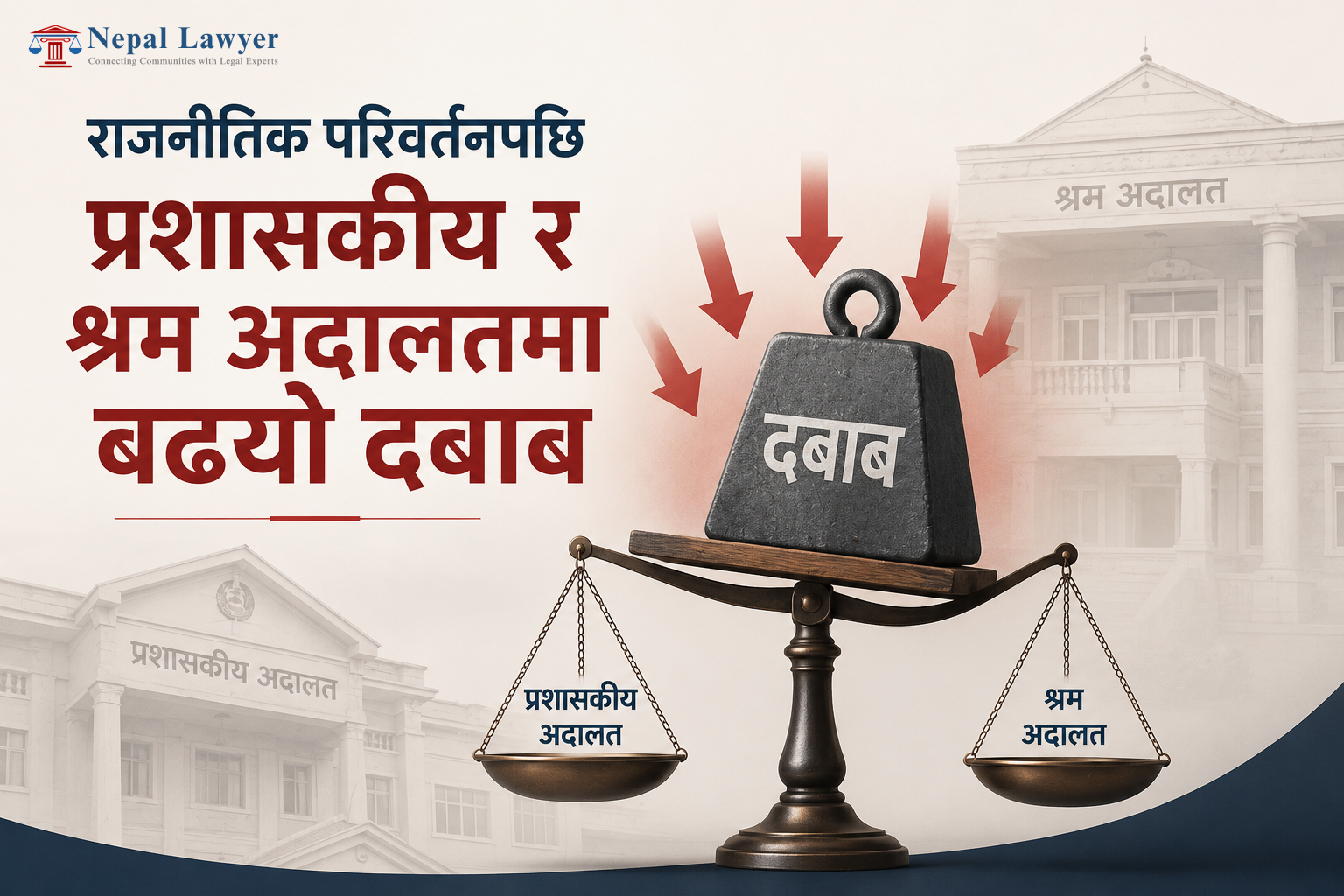
The government’s growing influence across state institutions has now reportedly reached the judicial sector, with allegations emerging that officials from the Ministry of Law (कानुन मन्त्रालय) have been pressuring members of quasi-judicial bodies to resign following recent political developments.
According to information obtained from sources familiar with the matter, Law Secretary (कानुन सचिव) Parashwar Dhungana allegedly contacted members of both the Administrative Court (प्रशासकीय अदालत) and the Labour Court (श्रम अदालत), suggesting that they voluntarily step down before the government makes any formal decision regarding their appointments.
Sources claim the secretary conveyed the message in the name of Law Minister (कानुनमन्त्री) Sobita Gautam, stating that the “new political environment” could lead to the review or replacement of appointments made under the previous administration.
Although the government recently moved to abolish more than 1,500 positions through an ordinance (अध्यादेश), judicial and tribunal bodies had not officially been included in the restructuring process. However, insiders say there are ongoing internal efforts within the Ministry of Law (कानुन मन्त्रालय) to encourage resignations from tribunal officials in order to avoid potential legal controversy and public criticism that could arise from direct dismissal.
The Administrative Court (प्रशासकीय अदालत) is currently headed by Dr. Tek Bahadur Ghimire, with Nawal Kishor Yadav and Alok Chandra Shrestha serving as members. Likewise, the Labour Court (श्रम अदालत) is chaired by Janak Pandey, while Shailendra Kumar Chaurasiya and Kumari Kharel serve as members.
Under Nepal’s legal framework, the chairpersons of both courts are appointed by the Government of Nepal (नेपाल सरकार) in consultation with the Judicial Council (न्याय परिषद्), while court members are directly appointed by the government.
Source: Information compiled from government sources, legal sector insiders, and publicly available institutional records.