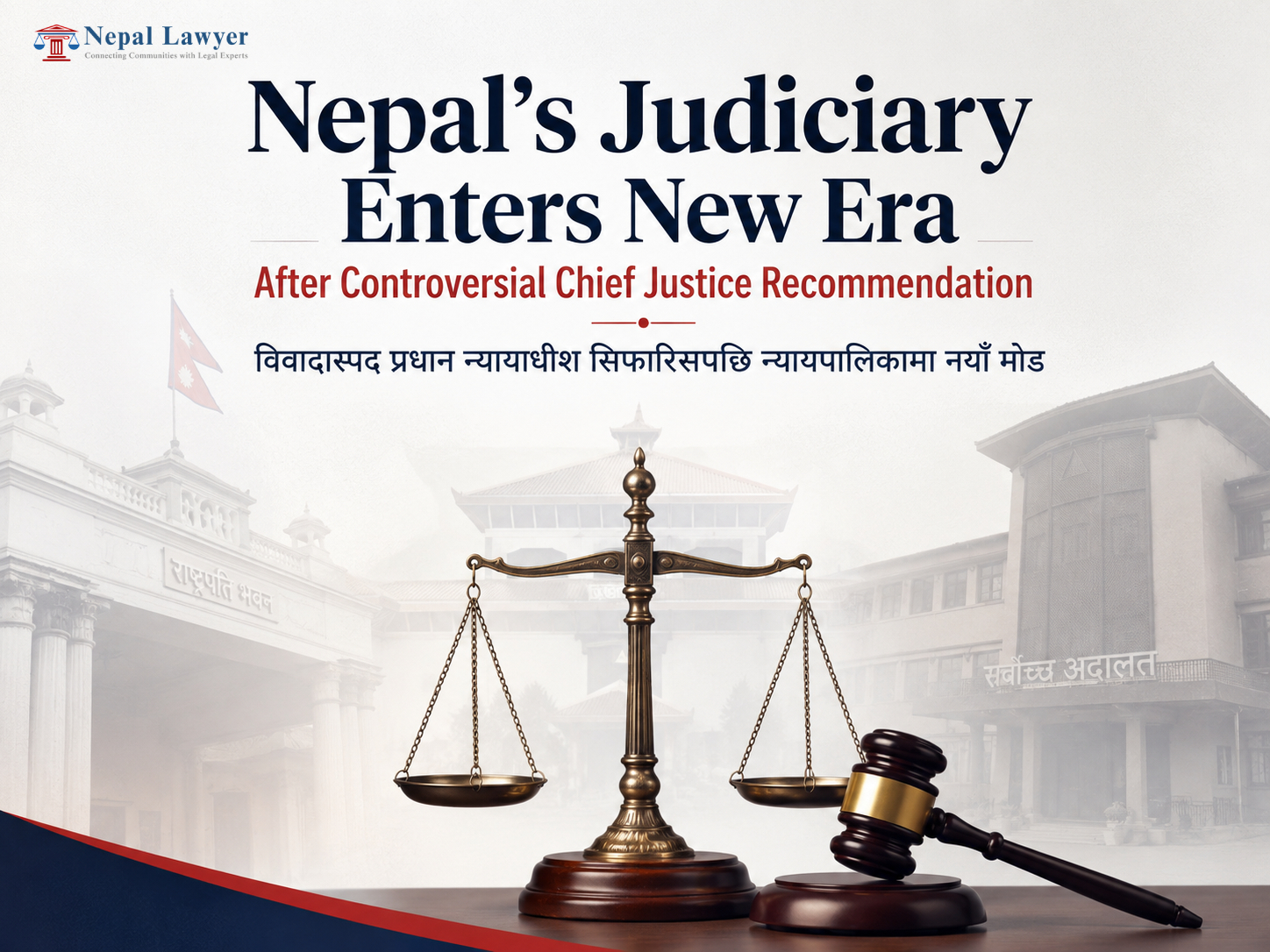
Nepal’s Constitutional Council has broken from a judicial tradition followed for nearly seven decades by recommending a fourth-ranking Supreme Court justice for the position of chief justice. The decision, led by Prime Minister Balendra Shah, sparked disagreement within the council and concern among legal experts and the legal community.
The council recommended Justice Manoj Kumar Sharma as the 33rd Chief Justice (प्रधान न्यायाधीश), bypassing senior justices Sapana Pradhan Malla, Kumar Regmi, and Hari Prasad Phuyal, all of whom ranked above him in seniority (वरिष्ठता). Justice Malla has been serving as Acting Chief Justice (कामु प्रधान न्यायाधीश) since the retirement of former Chief Justice Prakash Man Singh Raut in March.
According to sources present during the meeting, Prime Minister Shah defended the recommendation by arguing that appointments should not rely solely on tradition (परम्परा) or seniority. He reportedly emphasized merit (योग्यता), judicial competence (न्यायिक क्षमता), and expertise (विशेषज्ञता) as more important considerations in selecting the head of the judiciary (न्यायपालिका).
However, the decision faced resistance from two members of the six-member Constitutional Council (संवैधानिक परिषद्), including the chairperson of the National Assembly (राष्ट्रिय सभा) and the leader of the opposition (प्रतिपक्ष दलका नेता). Both formally recorded their objections, expressing concern that the long-standing convention (परम्परागत अभ्यास) of promoting the senior-most justice had been ignored without convincing institutional reasons.
Legal experts have also questioned the move. Constitutional scholar Bipin Adhikari stated that while Nepal’s Constitution (संविधान) does not legally require the senior-most justice to become chief justice, any deviation from the established practice should be supported by exceptional and transparent reasons. He warned that bypassing senior judges without strong justification could increase perceptions of executive influence (कार्यपालिकाको प्रभाव) over the judiciary and potentially affect judicial independence (न्यायिक स्वतन्त्रता).
The Nepal Bar Association also expressed concern over the recommendation. General Secretary Kedar Koirala said the association was surprised by the council’s decision and confirmed that its advisory committee would discuss the matter and determine an official position.
Justice Sharma was born on June 18, 1970, in Birgunj and comes from a strong legal family background. He is related to former Chief Justice Damodar Sharma. Sharma completed his law degree from Nepal Law Campus, earned an LLM from Savitribai Phule Pune University, and later completed a PhD in Labour Law from Tribhuvan University.
After obtaining his advocate licence (वकिल लाइसेन्स) in 1994, Sharma worked with Pioneer Law Associates and later joined Shreeman Law Firm. He entered the judiciary in 2013 as an additional appellate court judge and became a permanent Supreme Court justice on April 18, 2019. Since February 2024, he has also been serving on the Constitutional Bench (संवैधानिक इजलास).
Apart from judicial duties, Sharma has also contributed to judicial reform (न्यायिक सुधार) and access to justice (न्यायमा पहुँच) initiatives. He previously chaired the Justice Access Commission and served on the Supreme Court’s Information Technology Committee. Internationally, he has represented Nepal in judicial forums and conferences related to intellectual property and climate change-related judicial decisions.
If approved through the parliamentary hearing process (संसदीय सुनुवाइ प्रक्रिया), Sharma could serve a full six-year term because he will reach the mandatory retirement age of 65 only in 2032. Under Article 129 of the Constitution of Nepal, any Supreme Court justice with at least three years of service is eligible to become chief justice.
The recommendation will now move to a joint parliamentary hearing committee of the House of Representatives (प्रतिनिधि सभा) and National Assembly. The committee will invite public complaints (उजुरी), question the nominee, and review his judicial vision before forwarding the recommendation for final appointment by President Ramchandra Paudel.
Source: The Kathmandu Post